

 en
en  English
 Español
 русский
 Deutsch
 عربى
عربىOutdoor dining without a proper surface creates problems that compound quickly — food gets knocked over, prep space disappears, and the whole experience feels more chaotic than it should. For families setting up a full camp kitchen, for travelers who need to work with limited pack weight, and for buyers who need to stock a range that covers both, the wrong table choice is an ongoing source of friction. A Wholesale Camping Table purchase involves more than finding the lowest unit price — it involves understanding which designs actually work in the field, which materials hold up under real use conditions, and which features translate into the kind of customer satisfaction that drives repeat purchasing.
Why Outdoor Storage and Dining Are Consistently Under-Served
The Problem Is Structural, Not Just About Convenience
Most camping setups create a surface problem almost immediately. There is a tent, a sleeping pad, a cooler, cooking equipment — and nowhere flat and stable to put any of it while it is being used. Improvised surfaces like cooler lids, ground tarps, and car hoods are standard workarounds precisely because purpose-built solutions are either too heavy to carry to the campsite or too small to be genuinely useful.
The problem breaks down into several distinct pain points:
- Dining without a surface: Eating from a plate balanced on your lap works for one meal, not for a multi-day trip or a family with young children
- Food preparation without workspace: Cutting, assembling, and staging food requires a stable, clean surface that the ground and most improvised alternatives cannot provide
- Gear organization during camp activities: Cameras, phones, sunscreen, water bottles, and other active-use items need to be accessible without being on the ground
- Social gathering space: A table functions as a gathering point in camp, and its absence changes how the space feels and functions for groups
These are the functional gaps that a camping table fills — which is why they consistently appear near the top of gear priority lists for campers who have spent more than a few nights outdoors.
Camping Table Types and What Each One Solves
Folding Tables: The Workhorse of Outdoor Dining
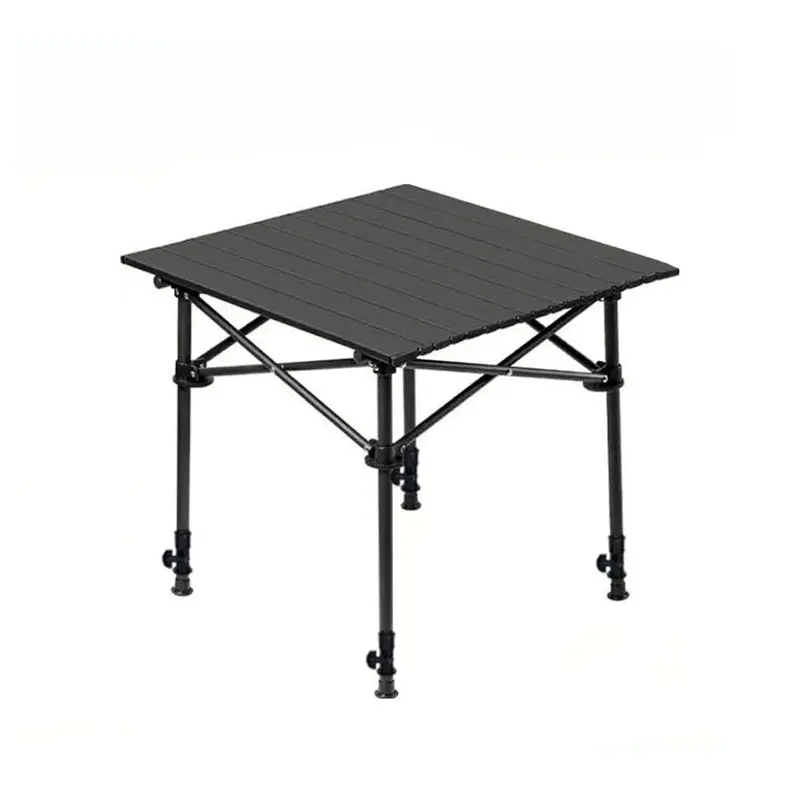
An outdoor folding camping table is the most widely used format across camping categories because it balances capacity, stability, and pack size in a way that most other designs do not. The folding mechanism allows the table to collapse to a flat profile for transport and storage, then deploy quickly at the campsite without tools.
Key characteristics of folding camping tables:
- Flat-fold or roll-top designs that collapse to a compact form factor for transport
- Aluminum or steel legs that provide stable support on relatively level ground
- Tabletop surfaces ranging from aluminum panels to slat constructions to fabric roll-tops, each with different stiffness, weight, and surface usability characteristics
- Weight ranges from ultralight designs suited to backpacking to heavier-duty family versions designed for car camping
A folding tables camping table in the medium weight category is well-matched to most car camping and drive-to-campsite use cases. It can handle meal prep, dining, and gear organization without the portability sacrifices of a heavier option.
Portable Outdoor Folding Table: Designed for Mobility
Where a standard folding camping table prioritizes surface area, a Portable Outdoor Folding Table is optimized for the smallest possible transport form and the lightest possible carry weight. These designs are popular with hikers who need a flat surface at stops, solo travelers who cook for one, and anyone whose camping involves a meaningful carry distance between vehicle and campsite.
Design features that support portability:
- Telescoping or foldable legs that collapse to a profile that fits inside or attaches to a pack
- Lightweight materials — typically aluminum alloy for the frame and compressed fabric or thin aluminum panel for the surface
- Weight limits lower than standard folding tables, suited to personal cooking equipment rather than full family meal service
- Rapid setup that can be accomplished in under a minute without a second person
This category has grown as the overlap between hiking and camping has increased — users who want to be active during the day but still enjoy a proper meal setup at camp are driving demand for lightweight tables that do not require sacrificing comfort entirely.
Family Camping Table: Meeting the Demands of Group Use
A Family Camping Table addresses a different set of requirements from portable designs. The priority shifts from minimum weight to adequate surface area, stability under active use, and durability across multiple camping seasons.
What a Family Camping Table typically offers:
- Surface areas large enough to accommodate four to six place settings plus serving dishes
- Leg configurations that provide stability on uneven ground, often with adjustable feet
- Heavier-duty frame construction that tolerates children leaning, plates stacking, and general group use without flexing or tipping
- Surfaces that can be wiped clean rather than requiring careful hand-washing after each use
For retailers targeting family outdoor recreation, this is a high-value category — families invest in outdoor equipment with the expectation that it will last multiple seasons, which justifies higher price points than solo or travel-oriented products.
Camping Table with Adjustable Height
When Fixed Height Is Not Enough
A Camping Table with Adjustable Height serves scenarios that fixed-height tables cannot — cooking while standing, converting between dining height and prep height, accommodating users of different sizes, and serving as both an activity table and a dining surface in the same camping session.
Practical applications that drive demand for height-adjustable designs:
- Camp kitchen setups where the cook prefers standing height for prep work but sitting height for dining
- Campsites where the only available level ground puts a fixed-height table at an awkward working level
- Mixed-age groups where children need a lower surface and adults need a higher one
- Extended camping stays where the table serves multiple functions across different parts of the day
The mechanical complexity of height-adjustment systems adds weight and cost relative to fixed-height alternatives, but the functional versatility supports premium positioning in the product range.
Material Comparison: Which Tabletop Works for Which Use Case?
Wood, Aluminum, and Composite Surfaces Side by Side
Material selection for the tabletop surface is one of the more nuanced decisions in camping table design, because different materials perform very differently across the variables that matter in outdoor use.
| Material | Weather Resistance | Surface Feel | Weight | Durability | Maintenance |
|---|---|---|---|---|---|
| Aluminum panel | Strong — waterproof | Hard, slightly cold | Light | High | Low — wipe clean |
| Roll-top fabric/slat | Moderate | Soft, flexible | Lightest | Moderate | Low — compact pack |
| MDF / plywood top | Lower — absorbs moisture | Natural, warm | Heavier | Moderate | Medium — needs protection |
| Wood Top Camping Table | Lower without treatment | Natural, warm | Heaviest | High with care | Higher — oil or seal periodically |
| Composite / HDPE | Strong — waterproof | Functional | Medium | High | Low — wipe clean |
A Wood Top Camping Table carries aesthetic appeal that aluminum and composite surfaces cannot replicate — the natural texture and visual warmth of wood reads as premium in a way that matters for certain market segments. The tradeoff is that untreated wood absorbs moisture and requires more care than synthetic alternatives. For buyers targeting premium outdoor lifestyle consumers, wood-top designs justify higher price points and hold their value in the market. For buyers targeting practical, frequent-use campers, aluminum or composite surfaces offer lower maintenance overhead with adequate durability.
Waterproof Camping Table: Why It Matters More Than It Sounds
A Waterproof Camping Table is not simply a table that tolerates rain — it is a design choice that affects the full service life of the product in outdoor environments where moisture is nearly constant. Tabletops that absorb water swell, warp, develop surface mold, and eventually delaminate. Frame joints that trap moisture rust or corrode. Surfaces that seem adequate in a showroom may fail within a season of real outdoor use.
Features that determine actual waterproofing performance:
- Sealed or inherently waterproof tabletop material — aluminum, composite polymer, or treated hardwood with sealed edges
- Frame materials and coatings that resist corrosion — anodized aluminum, powder-coated steel, or stainless steel for connection hardware in marine environments
- Drainage geometry that does not allow water to pool on the surface or in structural channels
- Folding mechanisms that do not trap moisture in pivot points
For buyers in coastal, tropical, or high-humidity markets, waterproof specification is a baseline requirement rather than a premium feature. Stocking tables that do not meet this standard in those markets generates returns and negative reviews that damage the product's retail position.
Matching Camping Table Type to Retail Category
How to Structure a Range That Covers the Market
For wholesale buyers building a camping table assortment, the goal is to cover the main use-case categories without excessive overlap or gaps. A well-structured range gives retail customers a clear decision path rather than a confusing array of similar options.
A logical range structure:
- Entry-level portable: Lightweight folding table for solo and travel use — price-competitive, adequate quality, broad appeal
- Mid-range family: Standard folding camping table with adequate surface area and solid construction — the volume driver in most retail environments
- Premium wood-top or adjustable: Higher price point for consumers who prioritize aesthetics or versatility — drives margin and brand positioning
- Specialty waterproof: Beach, coastal, or high-humidity specific designation that allows clear category positioning
A Travel Camping Table in the portable category and a Family Camping Table in the mid-range category are typically the two highest-volume SKUs in most assortments. The premium and specialty additions serve defined segments without cannibalizing the core volume.
What Buyers Should Evaluate When Sourcing Camping Tables
A Practical Checklist for Wholesale Procurement
Wholesale Camping Table procurement decisions involve more variables than unit price. Buyers who evaluate across the full range of relevant factors make fewer costly mistakes than those who focus narrowly on price per unit.
Evaluation points for camping table sourcing:
- Construction quality at joints and hinges — the points where folding mechanisms connect to the frame are where failures occur; inspect sample units at these specific points
- Tabletop surface durability — evaluate surface material under simulated use conditions, not just visual inspection
- Load rating vs actual use expectation — manufacturer load ratings are often measured under ideal conditions; evaluate whether the rating is appropriate for the expected real-world use
- Folded dimensions and carrying bag quality — the carrying solution affects the customer experience significantly; a table that folds well but has a poor bag gets negative reviews that affect the product's retail performance
- Setup time and mechanism smoothness — time the setup process with a sample unit; mechanisms that require two people or significant force will generate customer complaints
- MOQ and production lead times — understand the supplier's minimum order requirements and production schedule before committing to a range
The Wholesale and Sourcing Perspective
What Makes a Camping Table Supplier Worth the Relationship
A reliable Camping Table Supplier relationship delivers more than product — it delivers consistency across production runs, responsiveness to specification adjustments, and the kind of quality management that reduces the return rate and customer service load that poor-quality product generates.
Key supplier evaluation criteria:
- Production capacity and lead time reliability — consistent delivery against committed timelines reduces inventory risk
- OEM and customization capability — the ability to adjust dimensions, surface materials, or branding for specific retail requirements adds flexibility to the sourcing relationship
- Quality control documentation — inspection records and testing documentation provide confidence in batch consistency
- Sample availability — a supplier who provides clear samples before committing to production demonstrates confidence in their product
The camping table category has grown as outdoor recreation has become a mainstream rather than specialist activity. Buyers who establish strong supply relationships now — with suppliers who understand both the product requirements and the retail environment — are better positioned to respond to continued demand growth than those who treat sourcing as a purely transactional exercise.
A well-chosen camping table does not just add a surface to a campsite — it reorganizes the entire outdoor experience around a functional center point. Dining becomes more comfortable, food preparation becomes more practical, and the campsite gains the kind of organized structure that makes multi-day trips genuinely enjoyable rather than just manageable. For buyers sourcing at wholesale volume, understanding how the different table types, materials, and features map to real user needs is what separates a product range that sells consistently from one that requires constant markdown and promotional support to move. Zhejiang Mansen Leisure Products Co., Ltd. manufactures and supplies a range of camping tables including portable folding designs, Family Camping Tables, wood-top configurations, and waterproof variants suited to diverse market requirements. For procurement teams evaluating suppliers or looking to expand their outdoor furniture assortment, reaching out to their team for sample requests, MOQ discussions, or OEM development conversations is a practical starting point.
