

 en
en  English
 Español
 русский
 Deutsch
 عربى
عربىThere is a particular frustration that settles in when you arrive at a campsite after a long drive, the light is fading, the kids are restless, and you are still wrestling with poles that refuse to slot together correctly. Short trips are supposed to be restorative — a weekend away from routine, a beach afternoon, a festival in a field. But the setup process for a traditional tent can consume the energy that was supposed to go into actually enjoying the outing. An Automatic Instant Pop Up Tent changes this equation in a practical and immediate way, removing the most friction-heavy part of outdoor camping and replacing it with something that takes seconds rather than the better part of an hour.
Why Comfort Matters More on Short Outdoor Trips
There is an inverse relationship between trip length and setup tolerance. On a two-week expedition, an hour spent pitching a tent is proportionally minor. On a Friday-to-Sunday getaway, that same hour represents a significant chunk of usable time — and it tends to come at the end of a working day when energy reserves are already low.
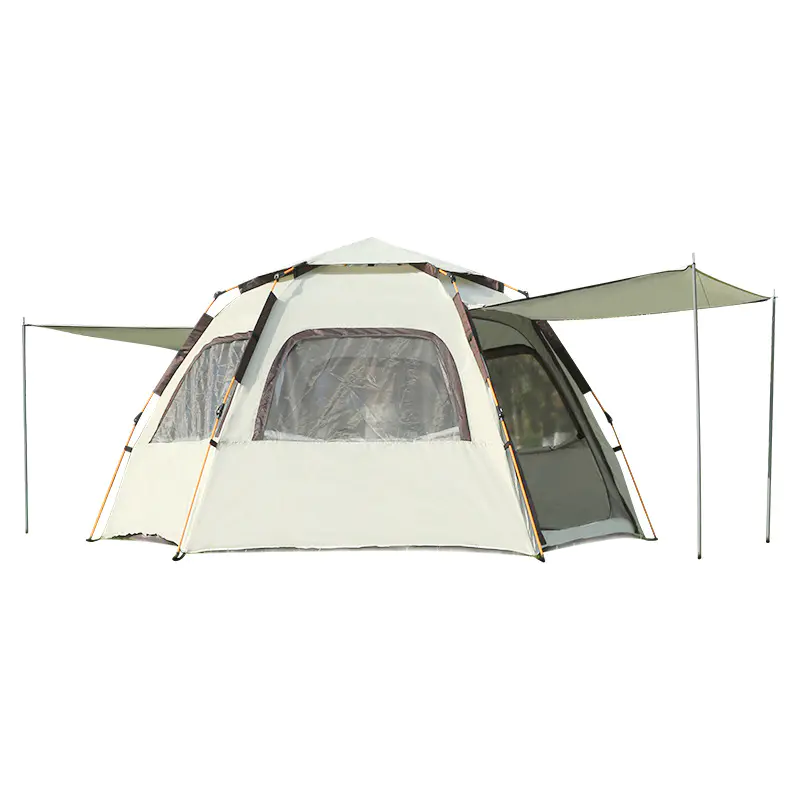
Short outdoor trips compress everything. The travel, the setup, the actual enjoyment, and the packdown all have to fit within a narrow window. When shelter setup eats into that window, the experience suffers before it has really begun.
Limited Time Means Every Minute Counts
Weekend camping trips, beach outings, and festival stays typically run between one and three nights. That brevity changes what matters:
- Setup complexity that would be acceptable on a longer trip becomes genuinely frustrating on a short one
- Weather windows matter more — a rain shower during a two-hour setup is a much bigger problem than during a twenty-second one
- Children and older family members experience waiting differently; the longer the setup, the more the trip atmosphere deteriorates before it starts
Comfort Often Determines the Overall Trip Quality
A shelter that goes up fast does more than save time. It signals to everyone involved that the trip is under control, that the difficult part is already done. That psychological shift — from pre-trip logistics to actually being there — happens faster when the tent is standing before anyone has had a chance to get impatient.
What Is an Automatic Instant Pop Up Tent?
The name describes the mechanism accurately. These tents use pre-bent or spring-loaded frame systems that are held under tension when packed. When released from their carry bag, the frame deploys outward and the tent takes shape in seconds — no pole threading, no assembly instructions, no guesswork about which section connects where.
How the Automatic Setup System Works
The frame is engineered to hold its compressed state during storage and transport, then release that stored tension when the bag is opened. The poles are either sewn into sleeves or attached to the tent body in a way that means the whole structure opens simultaneously. Staking down the corners and guy lines takes more time than the actual pop-up process, which is genuinely close to instantaneous.
This is different from a simple dome tent with simplified assembly. The automatic mechanism means there is no manual pole insertion at all — the tent arrives in shape, and the user's job is to secure it to the ground.
Difference Between Pop Up and Traditional Tents
A traditional tent requires:
- Identifying and separating poles
- Threading poles through fabric sleeves or attaching clips
- Erecting the structure progressively, usually requiring two people for larger models
- Attaching the fly sheet separately
- Staking and tensioning the guy lines
A Camping Tent Automatic Pop Up version eliminates most of this. The structure deploys on its own. The fly sheet is typically integrated rather than separate. The whole process — stake to stake — takes a fraction of the time that a traditional tent requires.
How Pop Up Tents Save Setup Time
Setup time is the most talked-about advantage, and it holds up under honest scrutiny. The difference between a pop-up and a traditional tent is not just convenience — it changes what is possible during a short trip.
Instant Shelter After Arrival
Arriving at a campsite, beach, or festival field and having shelter up before anyone has finished unloading the car changes the logistics of the whole experience. Items can be moved inside immediately. Children or older family members have somewhere to sit, rest, or shelter while other setup tasks continue.
No Complex Pole Assembly Required
Traditional tent poles require matching sections, identifying correct joints, and threading in the right sequence. In fading light, in wind, or with cold hands, this process becomes genuinely difficult. The Automatic Easy OutDoor Tent removes this step entirely — there is nothing to assemble.
Ideal for First-Time Campers
Many people who try camping for the first time abandon it because the logistics overwhelm the enjoyment. A tent that requires no prior experience to erect removes one of the main barriers. The experience of watching the tent rise from a bag without any effort is also — it has to be said — genuinely satisfying the first few times it happens.
How Pop Up Tents Improve Outdoor Comfort
Fast setup is the entry point. But the comfort advantages go deeper than simply getting shelter up quickly.
Provides Quick Shade on Sunny Days
On a beach trip or park outing, sun protection is often the primary function a tent serves rather than overnight shelter. An automatic tent that is standing within seconds of arrival means shade is available from the moment the group stops moving — not after a twenty-minute assembly process during which everyone is standing in direct sun.
Creates an Immediate Resting Space
Having an enclosed, shaded space available immediately upon arrival changes how a group uses its time. Bags go in, a base is established, and people can sit down before anything else is organized. For families with young children, this matters considerably — there is somewhere to put a tired toddler while other tasks continue.
Protects Against Light Rain and Wind
Short trips are particularly vulnerable to weather disruption because there is less time to recover from a bad start. A tent that is up before rain begins — because setup takes seconds rather than minutes — provides weather protection at the moment it is needed. This is not about extreme weather performance. It is about the ordinary light rain or gusty wind that can make an outdoor space uncomfortable within minutes of arriving.
Keeps Personal Gear Organized
An enclosed tent space provides immediate storage. Bags, electronics, food, and personal items go inside rather than accumulating on the ground around a half-assembled traditional tent. The campsite looks organized from the moment the tent opens, which contributes to the sense that the trip is going well.
Reduces Physical Effort During Camping
This is less discussed but genuinely relevant, particularly for family camping or trips with older participants. Kneeling on hard ground to thread poles through fabric sleeves, lifting assembled sections, and managing a heavy fly sheet all require physical effort that depletes the energy people came to replenish. Pop-up tents simply ask less of the person setting them up.
Why Automatic Easy OutDoor Tents Are Ideal for Specific Scenarios
Different outdoor situations bring their own requirements, and pop-up tents suit several of the most common short-trip contexts particularly well.
Family Camping Trips
Families with children have a lower tolerance for setup complexity than solo campers or couples. Children do not wait well. The adults managing setup are also managing children simultaneously. A tent that requires one person and thirty seconds rather than two people and forty-five minutes changes the family camping dynamic from stressful to manageable.
Beach Outings
Beach tents serve a different function from camping tents — they are primarily about shade and a base for belongings rather than overnight shelter. The automatic mechanism is especially well-suited here because beach conditions — sand, wind, sun — make traditional tent assembly actively difficult. A pop-up design handles beach conditions much more gracefully.
Music Festivals
Festival camping involves arriving in crowds, often in the dark, sometimes in rain, with luggage that has already been carried a considerable distance from the car park. The ability to establish shelter quickly and without assistance from a second person is a practical advantage in this context that traditional tents cannot match.
Fishing Adventures
Anglers often use tents as temporary shelter near the water rather than full overnight accommodation. The ability to deploy shelter quickly, move it if necessary, and pack it away when conditions change suits the flexible, reactive nature of fishing trips.
Picnics and Day Trips
Some pop-up designs are intended specifically for daytime use — shade shelters, changing tents, or windbreaks. For picnics and day outings where the group wants a defined base area without any of the complexity of traditional camping, these designs serve a clear function.
Automatic Instant Pop Up Tent vs Traditional Camping Tent
Comparing these two shelter approaches honestly reveals where each performs well — and where the trade-offs sit.
| Feature | Automatic Pop Up Tent | Traditional Camping Tent |
|---|---|---|
| Setup speed | Seconds to a few minutes | Varies — typically longer |
| Setup complexity | Low — no assembly required | Moderate to high |
| Number of people needed | Usually one | Often two for larger models |
| Suitability for beginners | High | Moderate |
| Weather resistance | Good for fair to moderate conditions | Varies by model |
| Packdown process | Requires practice initially | Straightforward once learned |
| Weight and portability | Light to moderate | Light to heavy depending on model |
| Ventilation options | Good on quality models | Varies widely |
| Suitability for short trips | Strong | Good but setup overhead is higher |
| Suitability for extended expeditions | Moderate | Strong |
The comparison shows that pop-up tents are not universally better — they make specific trade-offs that happen to align well with short-trip priorities. Traditional tents often offer more weather protection and more configuration options for extended outdoor stays. For a weekend, a festival, or a family beach trip, the pop-up advantages — speed, simplicity, and reduced physical effort — carry more weight.
Features That Make a Camping Tent Automatic Pop Up More Comfortable
Not all automatic tents are equal. The features that distinguish a comfortable pop-up tent from a basic one affect the experience significantly.
Ventilation Design
Heat buildup inside a tent — particularly one with an integrated fly — is a real comfort issue. Mesh panels, ventilation windows, and airflow channels in the design prevent the interior from becoming oppressively warm on sunny days.
Mesh Windows
Windows with fine mesh allow airflow while keeping insects out. For summer camping and beach use, this is not a minor detail — it determines whether the tent interior is pleasant or not after ten minutes in the sun.
Weather Protection
The rainfly design and seam sealing determine how well the tent handles rain. For short trips, genuinely heavy storm resistance may not be the priority, but being able to handle an overnight shower without leaking is a baseline expectation.
Interior Space Layout
How the internal space is organized affects comfort as much as the floor area measurement does. Gear pockets, hook attachments for lights or ventilation fans, and sensible door placement all contribute to how usable the interior feels.
Lightweight Construction
For beach trips and festivals where the tent is carried some distance, weight matters. Quality pop-up designs use lightweight frame materials that maintain structural performance without unnecessary bulk.
Quick Fold-Down Mechanism
The packdown process for pop-up tents requires more attention than the setup process — and this is the area where users encounter the most frustration if the design is not intuitive. A well-designed quick fold mechanism makes packdown straightforward with a small amount of practice. A poorly designed one turns a fast-setup tent into a fifteen-minute wrestling match at the end of the trip.
Common Mistakes When Choosing a Pop Up Tent
Understanding where buyers go wrong helps in making a better selection decision.
Choosing Size Based Only on Price
A tent rated for two people that was purchased because it was the cheapest option in the category will feel cramped with two adults and any significant amount of gear. Sizing up slightly is almost always worth it for comfort.
Ignoring Weather Conditions
Pop-up tents vary considerably in their weather resistance. For purely fair-weather use, a basic model is fine. For trips where overnight rain is possible, the flysheet coverage, seam sealing, and groundsheet waterproofing all matter.
Overlooking Ventilation Features
Buyers focused on weather protection sometimes choose tents with minimal mesh coverage. In warm conditions, this creates an uncomfortable, stuffy interior. The two requirements — weather protection and ventilation — need to be balanced in the design.
Buying a Tent That Is Difficult to Fold Back
The packdown process needs to be tested or researched before purchase. Some designs fold back intuitively; others require specific techniques that feel unnatural until practiced. Reading feedback specifically about the packdown experience gives a realistic sense of what to expect.
How to Choose a Pop Up Tent for Short Trips
Consider Trip Length
For truly short outings — a single afternoon or overnight stay — a lighter, simpler design is appropriate. For two or three nights, a tent with more weather protection and interior organization features earns its slightly heavier weight.
Consider Number of Users
Capacity ratings on tents tend to assume a tightly packed arrangement. For comfortable use, choosing a tent rated for one or two more people than the actual group size generally produces a more livable interior space.
Check Setup Mechanism
Not all automatic tents use the same deployment mechanism. Understanding whether the design is a true instant pop-up or a simplified traditional tent with fewer poles affects expectations about setup time and process.
Evaluate Portability
For trips where the tent is carried between the car and the campsite, the carry bag dimensions and weight are practical considerations. For beach use specifically, a compact carry bag that fits in a tote makes a real difference.
Match Tent Features to Outdoor Activities
A beach shade tent needs different features than a festival tent or a weekend campsite tent. Identifying the primary use case and choosing a design that matches it produces a better result than choosing a generic model.
Practical Questions Outdoor Users Often Ask
Are Pop Up Tents Good for Weekend Camping?
For most weekend camping situations — established campsites, fair to moderate weather, families or casual campers — pop-up tents perform well. They are not suited to exposed mountain camping or extreme weather, but for the typical weekend camping context, they are genuinely practical.
Can One Person Set Up an Automatic Tent?
Yes, in almost all cases. The automatic mechanism is specifically designed to require only one person. This is one of the design's practical advantages over traditional dome tents, which often need a second person to hold sections in place during assembly.
Are Pop Up Tents Waterproof?
Quality models with appropriate waterproofing ratings handle rain without leaking. The key factors are the flysheet coverage, the waterproof rating of the fabric, and whether the seams are sealed. Lower-cost models may not perform adequately in sustained rain.
How Long Does Setup Usually Take?
The pop-up mechanism itself deploys in seconds. Staking down corners and attaching guy lines adds a few minutes. Total setup from bag to staked is typically under five minutes for a person doing it for the second or third time.
Do Automatic Tents Work in Windy Conditions?
With adequate staking and guy line tensioning, pop-up tents handle moderate wind acceptably. In strong or sustained wind, the staking arrangement matters considerably — more stakes and tight tensioning are important regardless of tent design.
Are They Suitable for Families?
Family camping is one of the strongest use cases for pop-up designs. The simplified setup process works well in the context of managing children simultaneously, and the quick shelter availability after arrival improves the experience for everyone.
Can Beginners Use Them Easily?
Yes — this is one of the design's clearest advantages. There is genuinely nothing to assemble. A person who has never camped before can have a pop-up tent standing within minutes of opening the carry bag, including staking.
What Size Is Right for Short Trips?
For solo use, a two-person tent provides comfortable space. For two adults, a three-person or four-person tent gives room for gear without feeling cramped. Families with children benefit from a size rated for at least two more people than the adult count.
How Portable Are Pop Up Tents?
Most pop-up tents pack into a circular carry bag that is somewhat larger than equivalent-capacity traditional tents. The trade-off for the convenience of automatic setup is a carry bag that is less compact than a traditional tent with the same floor area.
Do They Require Special Maintenance?
No special maintenance beyond what any tent requires. Drying the tent completely before storage prevents mold. Checking the frame for bends or cracks after heavy use helps catch issues before they become failures. The automatic mechanism itself requires no lubrication or adjustment.
Getting More From Every Outdoor Trip
Short trips work best when the logistics stay out of the way of the experience. A Camping Tent Automatic Pop Up removes the setup obstacle that turns an arrival into an ordeal, and replaces it with something that feels almost effortless in comparison. Shade, shelter, and a base for belongings are available within seconds of arriving, which means the trip — the actual enjoyment of being somewhere — can begin immediately. For outdoor retailers, wholesale buyers, and product sourcing teams evaluating tent options across different consumer segments, the pop-up category covers an increasingly wide range of outdoor use cases that traditional tent designs serve less efficiently. Zhejiang Mansen Leisure Products Co., Ltd. manufactures automatic pop-up tent products across a range of sizes and configurations, with the product development capability and production consistency to support wholesale and private label requirements for outdoor leisure markets. If your product range has a gap in quick-setup shelter solutions, or if you are building out an outdoor category, reaching out with your specific requirements is a productive starting point.
