

 en
en  English
 Español
 русский
 Deutsch
 عربى
عربىCamping gear has been moving toward simpler setup experiences. Not just lighter materials, but also ways to reduce steps when arriving at a site.
One example is the automatic outdoor tent, a structure that focuses more on motion and less on assembly. It doesn't remove the need for handling, but it changes how that handling feels in practice.
In real use, the difference shows up quickly. Especially when the environment is not stable or when time is limited.
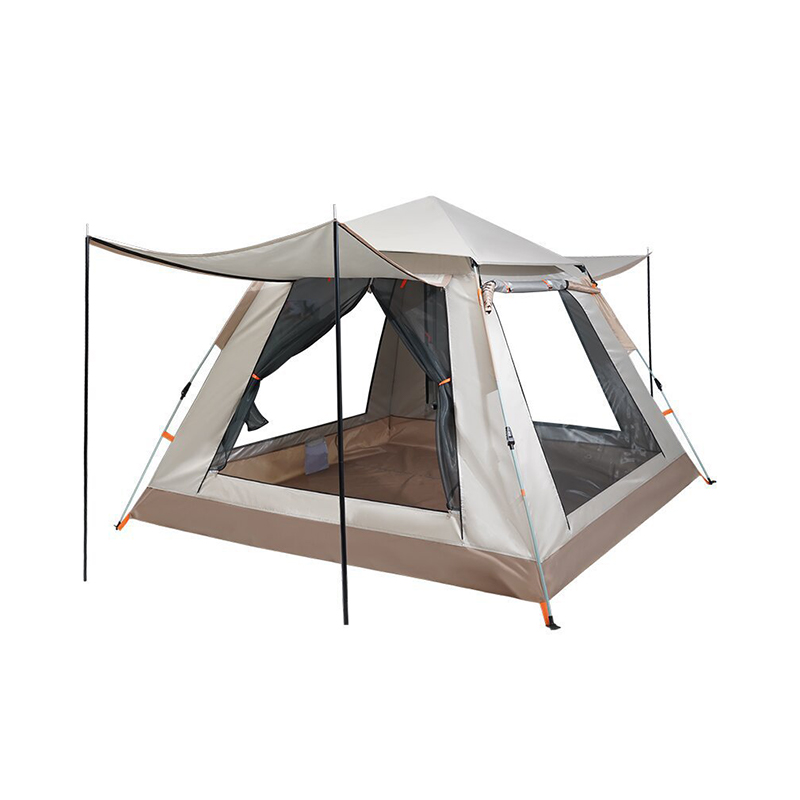
What is an automatic outdoor tent and how does it change the camping setup experience
An automatic outdoor tent is usually built around a frame that already holds its basic shape. Instead of building it piece by piece, the structure opens in a more continuous movement.
People often notice the difference in the first few minutes of use. There is less searching for parts, less matching of components. It feels more like unfolding than constructing.
A few practical changes stand out:
- Setup becomes more about placement than assembly
- Fewer small parts need attention on the ground
- The structure "takes shape" once released
It still requires handling, though. Especially when positioning it correctly against wind or uneven surfaces.
How does it open and fold in real outdoor conditions without complex steps
In real outdoor use, opening is rarely as clean as indoor demonstrations. Ground is uneven, wind may shift direction, and space is not always clear.
The frame responds as it is released, but not always perfectly symmetrical. Sometimes one side opens slightly faster, and the rest follows.
Folding works in reverse, though it often feels more sensitive than opening. The structure prefers controlled movement rather than quick force.
| Situation | What usually happens |
|---|---|
| Calm ground | Smooth unfolding |
| Uneven ground | Slight imbalance during opening |
| Windy condition | Needs adjustment while opening |
| Folding back | Requires more controlled handling |
It's less about complexity, more about timing and attention.
What makes the internal frame system respond quickly during setup and packing
The internal frame is not a loose collection of rods. It behaves more like a connected path.
When released, stored tension guides the movement outward. The fabric doesn't lead the shape, it follows it.
During packing, the same idea applies in reverse. Once pressure is applied in the right direction, the structure tends to fold along familiar lines instead of random bending.
What matters most here is not speed alone, but consistency of movement. If one section resists, the rest of the structure feels it immediately.
When is this type of tent more practical than traditional camping options
There are situations where this kind of structure feels more suitable, especially when setup time is not something to spend too long on.
For example:
- Short stops during travel
- Frequent moving between locations
- Camps where weather changes quickly
In those cases, reducing steps makes a noticeable difference.
But in longer stays, where setup is done once and left unchanged, traditional structures still offer different kinds of flexibility. Some users prefer adjusting parts manually over relying on a fixed mechanism.
So the choice often depends less on design and more on usage pattern.
How do wind and ground conditions influence stability during use
Outdoor conditions rarely stay consistent. A shelter that behaves smoothly in one place can feel different just a few meters away, depending on soil firmness or open exposure.
In the case of an automatic outdoor tent, stability is less about the frame alone and more about how the ground and wind interact with it. The structure can stand well, but it still reacts to its environment.
Wind tends to test the outer surface first. If the base is not well anchored, small shifts can spread through the frame. On softer ground, the issue is usually uneven support rather than strength.
A few typical patterns appear in real use:
- Firm ground helps keep the base steady with minimal adjustment
- Loose ground can create slight tilt during setup
- Open wind areas may require more attention to orientation
- Sheltered spaces reduce movement but may limit airflow
Nothing behaves in a perfectly fixed way outdoors. The structure responds to what it is placed on, not just how it is built.
What design choices affect water resistance and internal comfort levels
Water resistance is not controlled by a single factor. It usually comes from how different layers and joins work together.
In an automatic outdoor tent, the surface material is only one part of the picture. The way seams meet, how edges are finished, and how airflow is managed all contribute to the final experience inside.
Comfort is closely tied to how air moves. When airflow is restricted, condensation becomes more noticeable. When it is too open, warmth is harder to maintain.
There is a balance between protection and ventilation that depends on structure rather than one single setting.
How can common setup and folding mistakes be avoided in outdoor use
Most issues during setup or folding do not come from complexity. They come from timing, angle, or uneven handling.
One common situation is releasing the structure too quickly without checking surrounding space. Another is folding from one side without letting the frame relax evenly.
| Situation | What usually causes it |
|---|---|
| Uneven opening | One side released before the other |
| Resistance during folding | Frame not aligned with natural fold path |
| Fabric twisting | Quick motion without guiding the edges |
| Partial collapse | Ground support not checked before folding |
Small adjustments in handling often prevent most of these issues. It is less about force and more about sequence.
Which maintenance tips help extend the product lifecycle in regular use
Maintenance in outdoor equipment is often about consistency rather than complex procedures. The same applies here.
After use, moisture is usually the first thing to deal with. Leaving the structure damp for long periods can affect both fabric and frame movement over time.
Storage conditions also matter. When kept in compressed form for long durations without adjustment, the folding points may become less responsive.
Some practical habits often help:
- Let the structure dry fully before packing
- Avoid storing under continuous pressure in the same shape
- Check moving joints occasionally for stiffness
- Keep fabric free from debris after outdoor use
Nothing in this process is difficult, but it does require regular attention.
Some outdoor gear tends to feel different only after repeated use, when small details start to matter more than initial impressions. The way a structure responds in different environments often becomes more noticeable over time.
An automatic outdoor tent fits into that category of equipment where behavior is shaped by both design and surroundings, rather than a fixed pattern of use.
