

 en
en  English
 Español
 русский
 Deutsch
 عربى
عربىChoosing a tent by its labeled capacity sounds simple enough — until you show up at a campsite and realize two adults barely fit in a "2-person" tent once sleeping bags and a single bag are inside. It happens more often than most campers expect. The marketed number and the lived experience can be quite different, and buying without understanding that gap leads to either a cramped weekend or a tent so large it barely fits in the car. Picking the right Automatic Instant Pop Up Tent capacity is genuinely one of the more consequential decisions in camping gear, and it deserves more thought than a quick glance at the label.
What Does Tent Capacity Actually Mean?
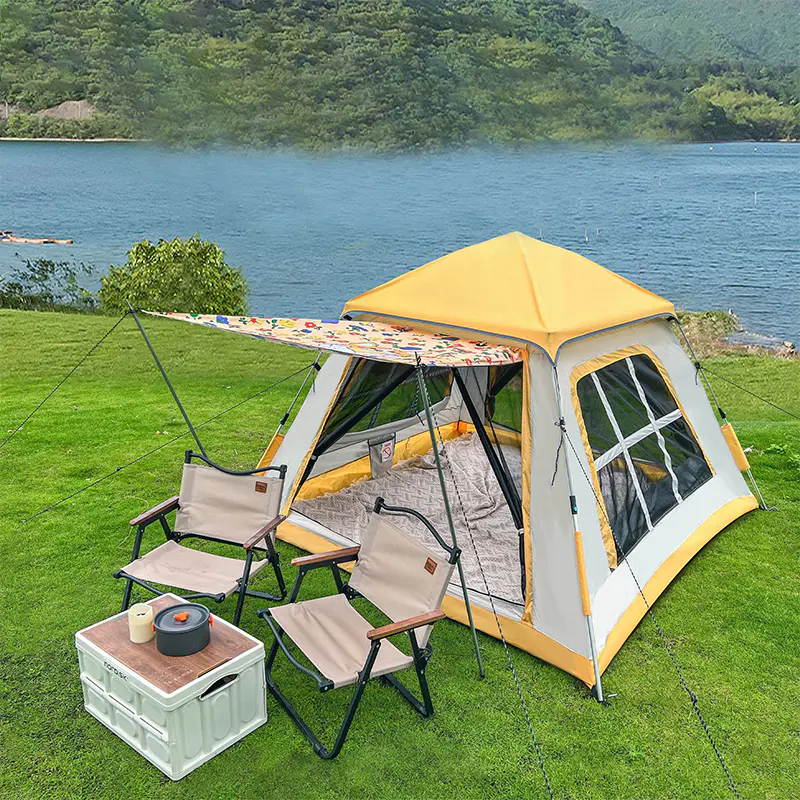
How the Industry Measures Sleeping Capacity
Tent capacity ratings are calculated around floor space per sleeper — a fairly generous per-person estimate that assumes sleeping bags are laid side by side with no extra room between them. No gear, no additional padding, and no space to move around. Under those conditions, the math works. In actual use, it rarely does.
That gap between marketing and reality is not unique to any one manufacturer. It is a structural feature of how the whole category is rated, which means buyers need to adjust their expectations when reading capacity numbers rather than assume the label reflects comfortable use.
Sleeping Capacity vs Comfortable Capacity
The practical rule of thumb that experienced campers tend to follow: size up from the advertised rating if comfort matters.
- A 2-person tent comfortably fits one person with gear, or two people who do not mind close quarters
- A 4-person tent works well for two people who want real sleeping space, or three people sharing without much gear
- A 6-person tent suits four to five people in reasonable comfort, or a family with children and equipment
None of this means the labeled capacity is wrong. It means the label describes a physical maximum, not a comfortable experience. Once you factor in sleeping pads, bags, clothing, and a small bag or two, the floor disappears faster than the specifications suggest.
Understanding Automatic Instant Pop Up Tent Sizes
2-Person Automatic Instant Pop Up Tent
The 2-person version is the most portable option in the pop-up category. It packs down compactly, weighs less than larger variants, and sets up in moments — genuinely useful for a solo camper who wants a bit of extra breathing room, or a couple on a lightweight trip where mobility matters more than spread-out sleeping space.
Where it works well:
- Solo travel with gear storage alongside the sleeping area
- Couples on short overnight trips with minimal equipment
- Situations where carrying weight or transport space is a constraint
- Festival camping or car camping where space is shared across multiple tents
Where it falls short: two adults with full gear kits will find the floor area tight. If both people move around at night, the close proximity becomes noticeable quickly.
4-Person Automatic Instant Pop Up Tent
The 4-person size occupies a particularly useful middle position. It is light enough to carry without strain, packs reasonably small, and provides enough interior space that two or three people can sleep without feeling cramped. Small families often find this size more practical than the 6-person option for shorter trips where portability still matters.
Situations where it makes sense:
- Couples who want genuine sleeping comfort with room for gear
- Small families with one or two young children
- Weekend camping trips where setup speed and pack size matter
- Groups of three sharing one tent on casual trips
The 4-person tent tends to be the size that gets used regularly rather than sitting in a garage between rare family trips. That frequency of use is itself a meaningful consideration.
6-Person Automatic Instant Pop Up Tent
The 6-person option is where families with children, groups, or anyone who genuinely wants to move around inside a tent should look. Interior height tends to be greater, floor area is significantly larger, and the space allows for a more organized layout with a dedicated gear zone separate from the sleeping area.
The tradeoff is real, though. A 6-person tent is heavier, packs larger, and takes up more space in a vehicle. For families driving to established campgrounds, that is rarely a problem. For anyone hiking to a site or working with limited transport space, those tradeoffs deserve serious consideration.
Where it fits:
- Families with two or more children
- Groups who want to share a large communal space
- Car camping trips where pack size is not a concern
- Extended trips where interior comfort over multiple days matters
2 Person vs 4 Person vs 6 Person Tent Comparison
A side-by-side look at how these three capacity categories compare across the factors that matter most in the field:
| Feature | 2 Person | 4 Person | 6 Person |
|---|---|---|---|
| Portability | High | Moderate | Lower |
| Pack Size | Compact | Medium | Larger |
| Sleeping Comfort | Tight for two | Comfortable for two | Spacious for families |
| Gear Storage Space | Limited | Moderate | Generous |
| Suitability for Couples | Workable | Comfortable | Oversized |
| Suitability for Families | No | Small families | Yes |
| Weekend Trip Convenience | High | High | Moderate |
| Interior Height | Lower | Moderate | Taller |
| Setup Weight | Light | Medium | Heavier |
| Weather Protection Surface | Smaller | Moderate | Larger |
The pattern across these categories is consistent: every step up in capacity brings more interior comfort at the cost of portability and pack size. Neither end of that tradeoff is wrong — it depends entirely on what kind of camping the tent is being used for.
Which Tent Size Works for Different Camping Styles?
Solo Campers
A solo camper technically fits in any size, but a 2-person tent offers a meaningful improvement over a single-person shelter without adding much weight. The extra floor area accommodates a full gear spread alongside the sleeping bag, and the automatic setup mechanism means there is no wrestling with poles at the end of a long day.
Couples Camping Together
This is where the 4-person size shows its value most clearly. Two adults sleeping in a 2-person tent with any real gear will feel the constraint by the second night. The 4-person version provides enough floor space for side-by-side sleeping with room to sit up, move around, and keep a bag at the foot of each sleeping area without crowding.
Small Families
A family with one or two young children has two reasonable options. The 4-person tent works if the children are small and the trip is short — children take up less floor space and tend not to bring the same gear volume as adults. The 6-person tent becomes the clearer choice when children are older, the trip is longer, or the family wants a proper gear zone separate from where everyone sleeps.
Larger Groups or Extended Family Camping
Six people sharing a single 6-person tent is the scenario the rating describes, but it is on the edge of comfortable. Groups of four or five fare better in this size, with the additional floor area creating natural sleeping zones and a central space for shared items. For groups larger than six, two 4-person tents often provide more practical flexibility than a single large shelter.
Festival and Event Camping
Festival camping has its own logic. Space per pitch is often limited, and the priority shifts toward fast setup and easy takedown over interior luxury. A 2-person or compact 4-person automatic tent suits this context well — it goes up quickly, fits within a typical allocated pitch area, and packs away without fuss when the weekend ends.
How Tent Capacity Affects Outdoor Comfort
Sleeping Space and Body Movement
Sleeping space is the factor that becomes most apparent during the night rather than during setup. A tent that felt spacious when you arrived can feel very different at two in the morning when you shift position and immediately encounter the tent wall or the person next to you. Comfort through the night depends on having enough floor area that neither person is constrained to a single position for hours.
The automatic Camping Tent Automatic Pop Up format does not change this dynamic — the interior space is determined by the footprint and wall geometry, just as with any other tent design.
Gear Storage and Organization
Every person in a tent brings gear, and that gear has to go somewhere. Sleeping bags, clothing bags, footwear, electronics, and personal items all compete for floor space that the capacity rating does not account for. Tents with vestibule areas or extended footprints solve some of this by providing covered exterior storage. Where no vestibule exists, internal storage eats directly into sleeping space.
Sizing up by one capacity level is often justified by gear storage alone, even for solo or couple camping where the sleeping space in a smaller tent would technically suffice.
Movement and Headroom Inside the Tent
Being able to sit upright without the ceiling pressing on your head is a comfort level that matters more over multiple nights than it might seem at first. Smaller capacity tents often have lower peak heights to save weight and reduce wind profile. Larger capacity tents gain interior height partly because the larger footprint allows steeper wall angles.
If the tent will be used primarily for sleeping and exiting immediately each morning, lower headroom is a workable compromise. If anyone will spend real time inside — during rain, for a relaxed morning, or simply dressing — interior height becomes a genuine quality-of-life factor.
Ventilation and Airflow
More interior volume generally means better natural airflow, though ventilation design matters at least as much as raw space. A well-designed smaller tent with good mesh panels will ventilate better than a larger tent with inadequate airflow architecture. That said, condensation — one of the more common overnight complaints in tents — is easier to manage when there is more air volume between sleeping occupants and the tent walls.
Privacy and Personal Space
For couples, personal space inside a tent is a minor consideration. For groups or families, it is not. Children and adults sharing a tent over multiple nights benefit from having enough floor area that each person has a defined zone, even informally. That psychological sense of having a dedicated space — even without physical walls separating it — reduces friction noticeably on longer trips.
Camping Tent Automatic Pop Up vs Traditional Tent: Capacity Considerations
Setup Time and How It Changes With Size
One of the central appeals of the Camping Tent Automatic Pop Up format is the dramatically reduced setup time compared to traditional pole-and-sleeve designs. That advantage holds across all capacity sizes, but the time difference between sizes within the pop-up category is worth understanding. A 2-person version typically deploys in under a minute. Larger 6-person versions may take slightly longer as the frame expands fully, though still substantially faster than any conventional tent of comparable size.
Portability and Pack Efficiency
Traditional tents pack into elongated cylindrical bags. Automatic pop-up tents typically fold into a flat disc or circular bag, which is a different storage shape that sometimes suits vehicle packing better and sometimes less well depending on the cargo configuration. This is worth checking for larger capacity pop-up tents where the folded diameter becomes significant.
Space Efficiency Relative to Traditional Designs
Pop-up tent frames are engineered to deploy automatically, which means the structural geometry is fixed rather than adjustable. This can make interior space slightly less configurable than a traditional pole tent of the same rated capacity, but the consistency of the deployed shape also means setup results are predictable rather than variable.
Convenience Advantages for Families
Families benefit from pop-up designs more than solo campers do, in a practical sense. Setting up a large traditional tent with children around — who may be tired, restless, or actively unhelpful — is genuinely difficult. A pop-up tent that deploys reliably in moments removes that friction entirely and gets everyone inside faster when weather is changing or energy is low.
Why Many Campers Size Up From the Advertised Capacity
Sleeping Comfort Improves Noticeably With Extra Space
The difference between sleeping at the rated capacity and sleeping at one person under the rated capacity is felt immediately. There is room to shift position, extend an arm without touching the other person, and keep gear at the side of the sleeping area rather than piled on top of it. For anyone planning to camp more than a single night, that difference compounds.
Gear Takes Up More Room Than Expected
Camping gear expands. Items that looked compact in a store or a bedroom take on a different scale once spread across a tent floor alongside sleeping bags, inflatable pads, and clothing. Campers who have had the experience of buying a tent that seemed adequate and discovering the floor covered with gear on the first night tend to size up for every subsequent purchase.
Rainy Days Change How the Tent Gets Used
A tent in good weather is largely a sleeping space. A tent during a full day of rain becomes a living space, a gear-drying area, a meal-planning zone, and sometimes a place where children need to burn off energy. That shift in function requires more interior space than the sleeping-only use case does. Sizing up with weather days in mind is a practical insurance choice.
Family Dynamics Improve With Space
Families camping together in too-small a shelter accumulate frustration faster than they do in a properly sized one. The physical constraint creates friction around movement, gear organization, bedtime routines, and morning preparation. A tent with adequate space for the group is not a luxury — it is the difference between a camping trip remembered positively and one that everybody privately agrees to never repeat.
Features Worth Considering Beyond Capacity
The Automatic Setup Mechanism
The quality and reliability of the deployment mechanism matters across all size categories, but it becomes more critical in larger tents where the spring tension required is greater. A well-engineered automatic easy outdoor tent deploys cleanly without requiring the user to manually assist the frame into position. Mechanisms that partially deploy and require manual correction lose the core convenience advantage of the format.
Water Resistance and Seam Quality
Floor and seam waterproofing directly affects how the tent performs in rain, and the relationship between floor area and waterproofing integrity is worth noting. Larger tents have more seam length and more floor surface to maintain. Products with taped seams and bathtub-style floors provide more reliable wet-weather performance than those with untaped seams regardless of capacity.
Interior Height and Ceiling Design
Ceiling geometry in pop-up tents is determined by the frame design rather than adjustable pole placement. Understanding the interior peak height and how it distributes across the floor plan matters for choosing between capacity sizes — a tent with a high center peak that drops steeply to the walls provides less usable headroom than the peak measurement alone suggests.
Packed Weight and Transport Dimensions
Weight matters for hiking and backpacking. Packed diameter matters for vehicle storage. Both vary significantly across capacity sizes and between different products at the same capacity. Knowing the transport constraints before choosing a size prevents buying a 6-person tent that does not fit in the available boot space.
Common Mistakes When Choosing Tent Capacity
Relying Only on the Advertised Number
The capacity number on a tent is a ceiling, not a comfortable target. Buyers who take the rating literally and make no adjustment for gear, real sleeping comfort, or personal space needs consistently end up dissatisfied with their choice.
Forgetting Gear in the Space Calculation
Sleeping bags, pads, backpacks, clothing, and footwear all need somewhere to go. Buyers who mentally calculate sleeping space without adding gear volume underestimate how crowded the floor becomes in practice.
Buying Large Without Checking Portability
A 6-person tent purchased for occasional family camping but stored unused because it is too heavy and bulky for most trips is not a practical investment. The tent that gets used is more valuable than the tent that provides more space on paper.
Not Matching Size to the Trip Type
Camping at a fixed site with vehicle access has different tent requirements than hiking to a remote spot or attending a festival. Matching the capacity choice to the actual trip context — rather than buying one tent for all possible uses — produces a more satisfying result.
Underestimating Transportation Space
Pop-up tents in larger capacity sizes fold into discs of significant diameter. Checking the folded dimensions against available vehicle cargo space before purchasing prevents the situation of arriving home with a tent that does not fit in the car it needs to travel in.
How to Choose the Right Automatic Easy Outdoor Tent for Your Needs
For Weekend Camping Trips
A 4-person size covers most weekend camping scenarios for two adults without feeling oversized or unnecessarily heavy. It packs into a manageable size, sets up quickly, and provides enough interior space that a comfortable night is realistic regardless of how much gear was packed.
For Family Camping Trips
Families with children benefit from sizing up relative to pure headcount. A family of three or four is often better served by a 6-person tent than by a 4-person one once the reality of children's gear, the need for a changing area, and the probability of a rain day are factored in.
For Festival and Event Camping
Speed and simplicity are the priorities at festivals. A 2-person or compact 4-person automatic easy outdoor tent sets up in moments, fits within a standard pitch allocation, and packs away without requiring a careful folding sequence. The pop-up format is particularly well-suited to this context.
For Beach and Summer Camping
Beach camping tends to involve sand, wind, and direct sun — conditions that favor tents with good ventilation, easy stakedown options, and UV-resistant fabrics. Capacity matters less here than configuration, though a 4-person tent provides useful shade space even when only two people are sleeping in it.
For Travelers and Frequent Campers
People who camp regularly across a range of destinations tend to develop preferences based on accumulated experience. Frequent campers often converge on the 4-person size as their go-to for solo or couple use — it is versatile enough to handle varied conditions while remaining genuinely portable.
Questions Campers Often Ask About Tent Capacity
Is a 2-Person Tent Big Enough for Two Adults?
It depends on the adults and the gear. Two people traveling light with slim sleeping bags and no separate gear bags can manage in a 2-person tent without significant discomfort. Two adults with full camping kit, larger sleeping bags, and any desire to move around at night will find it tight. Honest answer: it fits two, but comfortably it suits one person with gear or two people on very minimal trips.
Should Couples Buy a 4-Person Tent?
For most couples who camp with any regularity, yes. The 4-person size provides the kind of sleeping space where both people can move through a night without feeling constrained, store their gear off the sleeping surface, and wake up without immediately leaving the tent to get dressed. The weight and pack size difference compared to a 2-person tent is real but manageable for most camping styles.
How Much Gear Fits Inside a 4-Person Tent?
A 4-person tent used by two people comfortably accommodates two sleeping bags and pads, two mid-sized bags, and a small pile of personal items at the foot of the sleeping area. It does not provide unlimited storage, but it manages a reasonable two-person gear load without the floor becoming completely covered.
Is a 6-Person Tent Too Large for Weekend Trips?
For couples or small groups car camping over a weekend, a 6-person tent is not too large in terms of comfort — it is simply larger than necessary and involves more to pack and unpack. If transport space is available and the extra weight does not matter, there is nothing wrong with the choice. If portability or pack efficiency is a concern, a 4-person tent handles the same trip more efficiently.
Which Tent Size Is Easiest to Carry?
The 2-person version, consistently. Smaller footprint, lighter frame, smaller folded disc. Each step up in capacity adds meaningful weight and folded size. For anyone hiking with the tent on their back, the 2-person size is the practical ceiling for most people.
Do Larger Tents Take Longer to Set Up?
Marginally, within the pop-up format. The deployment mechanism works the same way regardless of size, but larger tents sometimes require a brief assist to ensure the frame locks fully into its deployed position. The difference is seconds, not minutes, and still dramatically faster than any conventional tent regardless of size.
What Tent Size Works Well for Families?
Families with children tend to find the 6-person size serves them well for trips of more than one night. The floor space accommodates adult sleeping areas alongside children's areas, leaves room for gear, and provides enough interior height that getting dressed without leaving the tent is realistic.
Can One Person Set Up a 6-Person Instant Tent?
Yes, in most cases. The pop-up mechanism does not require a second person to hold poles or thread sleeves. One person can deploy the tent, position it, and stake it down without assistance, though having a second pair of hands to hold the tent steady during staking in windy conditions is useful.
Which Tent Capacity Offers a Good Balance of Comfort and Portability?
The 4-person size consistently lands in that position for the widest range of campers. It is portable enough to handle without strain, packs into a manageable footprint, and provides enough interior space that a genuine comfort experience is achievable for one to three people. It is not the lightest option, but it delivers consistent utility across a broad range of camping contexts.
Tent capacity is less a fixed specification and more a starting point for a decision that depends entirely on how you camp, who you camp with, and what you bring. The 2-person format makes sense when portability drives the choice. The 6-person format makes sense when comfort and space for a family or group are the clear priority. The 4-person occupies the practical middle that suits a wide range of campers without pushing too hard in either direction. Whichever size matches your situation, the pop-up deployment mechanism means setup time is never the limiting factor — which leaves more time for the part of camping that actually matters. Zhejiang Mansen Leisure Products Co., Ltd. produces automatic instant pop-up tents across multiple capacity configurations, with designs suited to couples, families, and group camping. For sourcing inquiries, product specifications, or volume order discussions, reaching out to their team is a practical next step toward finding the right tent for your needs.
