

 en
en  English
 Español
 русский
 Deutsch
 عربى
عربى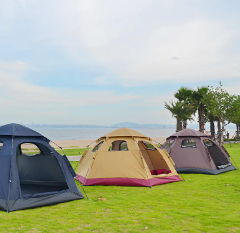
Spending time at the beach rarely follows a strict plan. Even when everything is prepared in advance, the experience tends to shift once people arrive. Wind may feel stronger than expected, sunlight can become more intense in certain areas, and the available space is not always what was imagined earlier. Because of these small variations, shade is no longer just a background detail—it quietly becomes part of how the entire day is structured.
Most people do not consciously analyze shade types before going to the beach. Decisions form in a more indirect way. They come from memory, habit, and small lessons collected over time. Someone who once struggled with unstable shade in windy conditions may start avoiding lightweight setups. Another person who found carrying heavy equipment across sand inconvenient may gradually prefer simpler, more portable options, even if that means accepting less coverage.
These choices rarely feel like deliberate decisions. They feel closer to instinct shaped by repetition.
Shade Preference Is Built Through Repetition Rather Than Planning
One consistent pattern in beach behavior is that people tend to return to what feels manageable. If something worked reasonably well before, it often becomes the default option again, even when alternatives exist.
Familiarity plays a quiet but strong role here. It is less about one solution being better than another and more about reducing uncertainty. A known setup removes guesswork, which makes the overall experience feel smoother.
For example, someone who has used a portable umbrella several times without issues may continue using it simply because it feels predictable. On the other hand, after experiencing a structure collapsing in strong wind, a person may begin looking for something more stable without actively analyzing why.
This is one of the reasons Sunshade Beach Tents gradually appear in repeated beach setups. They are not usually chosen as a dramatic upgrade. Instead, they tend to be adopted after small inconveniences accumulate over time and people start looking for a more consistent setup.
Environmental Conditions Quietly Reshape Decisions
Beach environments are not stable spaces. Even during calm days, conditions shift gradually. These changes are not always obvious at first, but they influence how comfortable a shaded area feels over time.
Sunlight angle slowly changes, which can make one spot feel comfortable earlier in the day and less suitable later. Wind may be mild near parking areas but noticeably stronger closer to open water. Even sand temperature can affect where people choose to stay.
Because of these variations, shade use becomes adaptive rather than fixed. A setup that works well in one location may feel slightly less effective just a short distance away.
In situations like this, more structured solutions begin to feel useful. Sunshade Beach Tents are often placed in areas where conditions are less predictable. Instead of relying on natural elements such as trees or rocks, the structure creates a more defined shaded zone that can be positioned where needed.
The key idea is not controlling the environment, but creating a stable personal space within it.
Sunshade Beach Tents in Early Decision Thinking
Before reaching the beach, some people already anticipate the need for a more stable shade setup. That expectation usually comes from past experiences rather than formal planning.
Sunshade Beach Tents often enter consideration at this stage. They are typically associated with situations where longer stays are expected, more items are brought along, or group use is involved.
Unlike minimal shade options, the structure introduces a clearer sense of space. It is not just overhead coverage. It becomes a small defined area that can hold movement, rest, and belongings without constant adjustment.
What distinguishes Sunshade Beach Tents in perception is not only physical structure, but expectation. People tend to assume a more consistent experience once the setup is completed compared to lighter, more temporary shade solutions.
Common Shade Types in Real Usage Terms
| Shade type | How it feels in use | What people usually notice |
|---|---|---|
| Natural shade | Passive, location-dependent | Changes with position and time |
| Umbrella | Light and flexible | Requires adjustment during the day |
| Semi-structured shelter | More defined space | Setup effort becomes noticeable |
| Sunshade Beach Tents | Stable but portable | Balanced space and coverage |
Early Interaction with Sunshade Beach Tents
When Sunshade Beach Tents are first set up, the experience is usually shaped by small adjustments rather than major steps. The structure is positioned, stability is checked, and items begin to be placed inside.
That initial phase matters more than it might appear at first. It is the moment when a physical object becomes part of the environment rather than something separate from it.
Inside the shaded space, behavior begins to shift slightly. Bags are placed more intentionally, sitting positions become less restless, and movement inside the area gradually decreases.
Unlike open shade setups where people often move frequently to follow sunlight, Sunshade Beach Tents reduce the need for constant repositioning. That alone changes the rhythm of how time is spent.
Why Stability Matters More Than Size
A common assumption is that larger shade automatically creates better comfort. In practice, that is not always how the experience feels.
Stability often matters more than size. A smaller but consistent shaded area can feel more usable than a larger one that requires frequent adjustment.
Sunshade Beach Tents are often evaluated through this lens. Their value is not just in coverage area, but in how reliably that coverage remains usable across changing conditions.
Wind plays a clear role here. Lightweight setups may shift or require repositioning, while more anchored designs tend to remain steady. Over time, that difference becomes part of how the experience is judged.
Early Behavior Patterns inside Shaded Space
Once Sunshade Beach Tents are in use, people naturally begin organizing the space without planning it in advance.
Some common patterns emerge:
- items placed toward edges to reduce sand disturbance
- central area kept open for sitting or resting
- orientation adjusted slightly instead of moving the structure
- shaded corners used for items needing less exposure
These behaviors are not intentional strategies. They develop gradually through repeated interaction with the space.
Why Early Experience Influences Long-term Use
The initial stage of using shade often shapes overall perception more than later stages. If setup feels confusing or the space does not function smoothly, that impression tends to carry forward.
Sunshade Beach Tents are frequently judged during this early interaction phase. When the setup feels intuitive and the space becomes usable quickly, the structure is more likely to be reused in future beach visits.
In contrast, if that early experience feels difficult or inconsistent, reuse becomes less likely.
This is why the setup moment—positioning, first use, and initial adjustment—carries more weight than expectations formed beforehand.
How Sunshade Beach Tents Behave in Real Beach Conditions
Once the initial setup phase is complete, attention gradually shifts away from the structure itself. People stop thinking step by step about how it was assembled and begin simply using the space it provides. At that point, Sunshade Beach Tents become less of an object and more of a temporary environment.
Beach conditions rarely stay the same for long. Even when the day feels calm at first, small changes in wind, sunlight direction, and surrounding activity slowly reshape how the shaded area feels. A setup that initially feels comfortable may begin to feel slightly different later—not because anything is wrong, but because the environment continues to shift around it.
How Sunshade Beach Tents Respond to Changing Conditions
One of the more noticeable characteristics of Sunshade Beach Tents is how they adjust to outdoor changes without requiring constant intervention.
Wind is usually the first element people become aware of. Instead of treating wind as a disruption, most users simply adjust their behavior within the shaded space. Items may be repositioned slightly, or openings may be modified to allow better airflow. The structure itself continues to act as a stable reference point even when conditions fluctuate.
Sunlight changes more gradually. As the angle shifts throughout the day, parts of the shaded area may become brighter or more indirect. Rather than moving the entire setup, people tend to adjust where they sit or how they orient themselves inside the existing space.
In practice, adaptation happens inside the structure rather than through relocation. That difference is what shapes long-term experience with Sunshade Beach Tents.
Small Behavioral Adjustments inside the Shaded Space
After some time, usage patterns begin to form naturally. These are not planned behaviors, but simple responses to comfort and convenience.
Common patterns include:
- placing frequently used items closer to the entrance for easier access
- shifting sitting positions slightly as light changes
- using specific corners for items that should remain cooler or less exposed
- adjusting posture instead of moving the entire setup
These adjustments are usually subtle, but they reflect how the space slowly becomes part of daily beach activity.
Compared to open shade areas where movement tends to be more frequent, Sunshade Beach Tents often encourage a slower rhythm. The defined boundary reduces the need for constant reaction to environmental changes.
Airflow and Internal Comfort Balance
Air movement inside Sunshade Beach Tents behaves differently depending on conditions outside. In more open setups, airflow is unrestricted, while fully enclosed environments can trap heat. The structure here sits between those two extremes.
On breezier days, the interior may feel slightly more dynamic, with gentle changes in temperature and airflow. On calmer days, the space becomes more still, but not completely closed or stagnant.
Instead of being constantly noticed, airflow becomes something people only think about when it changes. That shift in awareness affects how long the shaded area feels comfortable without needing to leave.
It also influences how items are arranged, since airflow patterns can subtly affect comfort across different parts of the space.
Time Perception Inside Sunshade Beach Tents
An often overlooked aspect of using Sunshade Beach Tents is how they influence the perception of time.
Without constant exposure to direct sunlight or frequent repositioning, time feels less segmented. Instead of tracking movement based on shade changes, people tend to rely on internal cues such as rest, hydration, or general activity cycles.
The actual duration spent at the beach does not change, but the way that time is experienced does. Fewer environmental interruptions create a more continuous flow of activity.
Rather than reacting repeatedly to external shifts, attention tends to stay within the shaded environment for longer periods.
Interaction with Surrounding Beach Activity
Sunshade Beach Tents do not exist in isolation. They are always part of a larger environment filled with movement, sound, and other people.
Nearby activity influences how the shaded space is used. When the surrounding area becomes busier, people often spend more time inside the tent, treating it as a quieter zone. When the environment becomes more relaxed, the space feels more open and less structured.
This relationship is not fixed. It changes depending on how the beach environment evolves throughout the day.
The shaded area becomes a flexible boundary between personal space and shared environment rather than a fully separate zone.
Practical Limits and Natural Adaptation
No outdoor structure avoids limitations, and Sunshade Beach Tents are no exception. Instead of eliminating those limitations, users typically adjust their behavior around them.
If wind increases, small changes are made to improve stability or reposition items. If sunlight shifts and reduces coverage in certain areas, movement happens inside the space rather than by relocating the structure.
Over time, these responses become automatic. After repeated use, people no longer think through adjustments—they simply react in familiar ways.
This gradual adaptation is part of what makes the structure feel more natural to use over time.
Why Sunshade Beach Tents Remain in Regular Use
The continued use of Sunshade Beach Tents is not based on a single strong feature. Instead, it comes from how multiple small practical elements work together in real conditions.
They provide a defined shaded area without completely separating users from the environment. They allow movement without requiring constant adjustment. They respond to environmental changes while maintaining a stable core structure.
Because of this balance, they fit situations where both flexibility and predictability are needed, even if neither is fully maximized.
Across carrying, setup, daily use, and extended comfort, Sunshade Beach Tents function less as isolated equipment and more as part of a behavioral pattern.
They influence how people move through space, how they settle, and how they experience time at the beach. The impact is not driven by a single feature, but by the accumulation of small interactions throughout the day.
Beach shade, in this sense, is not only about blocking sunlight. It becomes a way of shaping temporary personal space within an open environment.
Sunshade Beach Tents fit into that process as one of several ways people create structure within openness, balancing mobility with a sense of stability.
