

 en
en  English
 Español
 русский
 Deutsch
 عربى
عربىTired kids in the back seat, daylight fading fast, and a tent bag still full of poles nobody wants to sort through — that's the moment an Automatic Instant Pop Up Tent starts to make a lot more sense than the one your family used last summer. Camping trips are supposed to feel relaxed, not like a wrestling match with canvas and fiberglass rods in a parking lot while everyone waits. That single frustration, repeated across thousands of family trips every season, is exactly why so many households have shifted toward tents built for speed rather than tents built around a thirty-minute setup ritual.
What Makes a Tent Count as Instant?
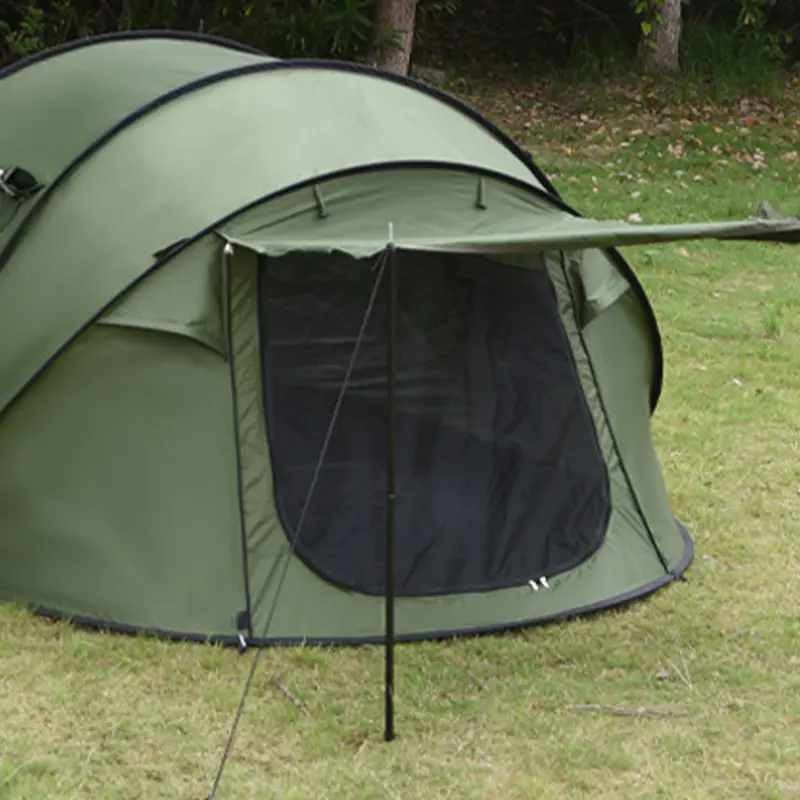
An instant tent relies on a pre-attached pole structure, usually spring-loaded or accordion-style, so the frame pops into shape the moment the tent gets pulled out of its bag. There's no separate pole assembly, no color-coded sleeves to thread, and no guessing which rod goes where.
Compare that to a traditional dome or tunnel tent, where poles arrive as separate pieces that need connecting end to end before they even get near the fabric. For a family juggling a cooler, a couple of sleeping kids, and fading light, that difference matters more than it sounds like on paper.
Why Does Setup Speed Matter So Much for Families?
Anyone who has tried pitching a tent while a toddler wanders toward the tree line understands this instinctively. Setup time isn't just a convenience metric; it's the difference between arriving at a campsite calm and arriving frazzled before the trip has even started.
A few reasons speed keeps showing up as the deciding factor for family campers:
- Kids get restless fast, and a long setup process eats into the window before patience runs out
- Weather can shift quickly, and a tent that goes up in a couple of minutes gets everyone under cover before rain arrives
- Late arrivals at a campsite, common with family schedules, leave less daylight to work with
- Parents often manage setup solo while a partner handles kids or gear, so a simpler process matters more here than for a couple traveling without children
How Does an Automatic Pop Up Structure Actually Work?
The mechanism behind a camping tent automatic pop up design isn't complicated once you see it in action. Flexible poles stay sewn into the tent body in a pre-tensioned arrangement, folded flat for storage. Releasing the tent from its packed position lets the tension in the poles snap the frame into its intended shape almost instantly.
Setting one up generally follows a short sequence:
- Remove the tent from its carry bag and lay it flat on the ground
- Release the retaining straps or clips holding the folded frame in place
- Let the pole structure expand into its full shape
- Adjust the tent into position and stake down the corners
- Secure guy lines if wind conditions call for extra stability
Packing back down reverses the process, usually folding along built-in seams that guide the poles back into their compact shape rather than requiring a fight to force everything into the bag.
Instant Tent or Traditional Tent: What Changes for a Family Trip?
| Factor | Instant Pop Up Tent | Traditional Pole Tent |
|---|---|---|
| Setup Time | A couple of minutes | Extended assembly of separate poles |
| Skill Required | Minimal, straightforward | Some familiarity with pole systems helps |
| Packing Down | Guided fold along built-in seams | Manual disassembly of each pole |
| Family Suitability | Well suited to trips with young kids | Workable but slower with kids underfoot |
| Storage Size | Slightly bulkier when packed | Often more compact when folded |
Neither style is universally right for every camper, but for households prioritizing a smooth arrival and departure, the instant format tends to remove a lot of the friction that traditional setups introduce.
Does an Instant Tent Hold Up Against Wind and Rain?
This is where a lot of buyers hesitate, assuming that a fast setup must mean a flimsier build. That assumption doesn't hold up well once you look at how these tents are actually constructed.
A wind and waterproof tent built for family use typically relies on:
- Oxford cloth fabric, valued for its tight weave and resistance to water penetration
- Sealed or taped seams that block moisture from seeping through stitch lines
- A rainfly layer positioned over the main body to shed water away from the tent
- Reinforced pole joints designed to flex under wind pressure rather than snap
- Guy line attachment points that add stability during gusty conditions
None of these features are exclusive to slower, traditional tents. Manufacturers building instant tents for family markets generally apply the same fabric and reinforcement standards, since a fast setup means little if the tent can't handle an evening storm.
How Many People Should the Tent Actually Fit?
Capacity claims on tent packaging tend to describe a tighter fit than most families find comfortable in practice. A tent listed for a certain number of occupants usually accounts for sleeping space alone, without leaving room for bags, a cooler, or kids who like to spread out.
A few practical guidelines help when sizing a tent for an actual family trip:
- Count gear space separately from sleeping space, especially for trips longer than a single night
- Add extra capacity if traveling with a dog or bulky equipment like a portable crib
- Consider ceiling height as well as floor area, since taller family members and kids who like to stand up inside the tent both benefit from more vertical room
- Look at door placement, since multiple entry points reduce the need to climb over sleeping family members during the night
Is Packing and Transporting an Instant Tent Actually Convenient?
Storage size is one area where instant tents sometimes trade a bit of compactness for their speed advantage. The pre-attached pole structure means the packed shape is often a flatter, wider disc or oval rather than a slim cylindrical bag.
That trade-off tends to matter less than people expect once it's weighed against the benefits:
- The disc shape often fits easily into a trunk or under a back seat without needing careful folding
- Carry straps built into most instant tent bags make single-handed transport simple
- No loose pole bag means one less item to track or lose between trips
- Setup and teardown speed frequently offsets the slightly larger packed footprint, especially for short trips where convenience outweighs storage efficiency
Which Camping Scenarios Suit an Instant Tent Best?
Certain trip types line up particularly well with what an Automatic Instant Pop Up Tent offers, while others may call for a different style entirely.
Family campground stays, where a car parks close to the tent site, suit instant tents well since the slightly bulkier pack size isn't a concern. Weekend trips with tight arrival windows also benefit, since less daylight gets spent on setup. Group outings involving multiple families often work well too, since several instant tents can go up around a shared area in the time it might take to assemble a single traditional tent.
Backpacking trips, where every ounce and every cubic inch of pack space counts, generally favor lighter, more compact traditional or ultralight tent designs instead. Long-distance trekking simply isn't the environment an instant tent was designed to serve.
What Should Retailers and Buyers Look for in a Reliable Camping Tent Factory?
Sourcing decisions extend well beyond the finished tent sitting on a shelf. A camping tent factory capable of consistent quality tends to show a few recognizable traits worth checking before committing to a bulk order.
- Consistent fabric sourcing, particularly for oxford cloth weight and coating quality across production runs
- Clear quality control checkpoints during stitching, seam sealing, and pole assembly stages
- Willingness to provide samples ahead of a larger order, allowing hands-on evaluation of setup speed and material feel
- Flexibility around private labeling or packaging adjustments for different retail markets
- Transparent communication around lead times, particularly during seasonal demand spikes
Retailers and sourcing managers evaluating an automatic tent supplier often find that a factory's willingness to answer detailed questions upfront says as much about reliability as any spec sheet could.
Bringing It All Together for a Smoother Camping Season
Choosing the right tent style ultimately comes down to matching the product to how a family actually camps, rather than chasing a single feature in isolation. Setup speed solves a real, recurring frustration for households juggling kids, gear, and unpredictable weather, and that convenience doesn't have to come at the cost of durability once fabric quality and construction details are accounted for properly. Families weighing an Automatic Instant Pop Up Tent against a traditional design should think through arrival timing, group size, storage space in the vehicle, and how much daylight typically remains by the time the campsite comes into view. Retailers and sourcing teams considering a supplier relationship face a parallel decision, weighing fabric consistency, sample availability, and communication just as carefully as families weigh setup time and weather resistance. For those exploring a dependable manufacturing partner behind reliable instant tent production, Zhejiang Mansen Leisure Products Co., Ltd. works with retailers and sourcing teams to develop family-ready camping tents suited to a wide range of markets, and reaching out for samples or product details is a practical next step for anyone ready to move forward.
