

 en
en  English
 Español
 русский
 Deutsch
 عربى
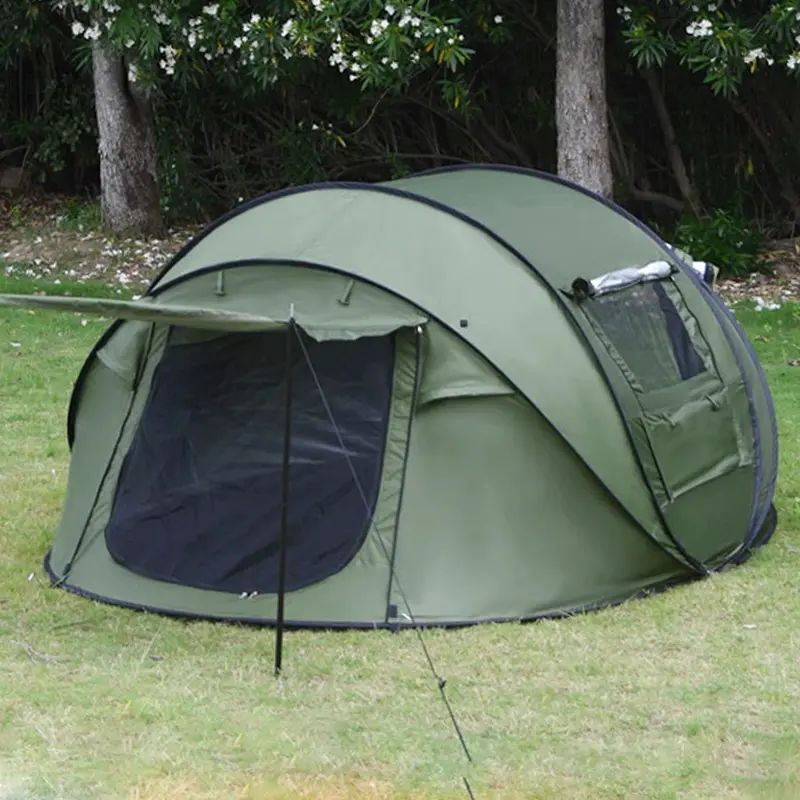
عربىYou have been to a campsite where the family in the next pitch struggled with poles and instructions for forty minutes while their kids wandered off impatiently. And you have also seen someone shake out a bag and watch their shelter spring fully into shape in under a minute. The contrast is stark — and it is exactly why so many campers are reconsidering what kind of tent they actually need. A Camping Tent Automatic Pop Up represents a different philosophy from the traditional pole-and-sleeve approach: it prioritizes setup speed and ease of use over the extended durability that conventional tents have historically delivered. Neither philosophy is wrong. The decision depends on what a buyer actually values — and that, as it turns out, is where the interesting comparison begins.
What Makes These Two Tent Types Fundamentally Different
The Setup Process Is Where the Divide Starts
Traditional tents require a sequence: unpack, spread the footprint, thread or clip poles, raise the frame, attach the fly, stake out the guylines. Done well, it takes a practiced camper around ten to twenty minutes. Done by a new camper in the dark or in the rain, it can take considerably longer — and the margin for error is real. A misrouted pole sleeve or a forgotten peg can compromise the whole structure.
A pop-up tent reverses this entirely. The frame is pre-attached and spring-loaded. The tent launches itself into shape and needs only to be staked at the corners to be functional. That shift — from assembly to deployment — changes the camping experience in ways that go well beyond convenience.
Packing Down Is the Trade-Off That Catches People Off Guard
Here is something worth knowing before buying: pop-up tents are fast to put up but slower and more involved to fold back down. The spring tension that makes setup instant works against you during packdown. Folding a pop-up tent flat requires a specific technique — typically a figure-eight fold that collapses the frame — and it takes practice before it feels natural.
Traditional tents disassemble straightforwardly. Pull the pegs, collapse the poles, stuff or roll. It is longer than a pop-up setup but shorter and less fiddly than a pop-up packdown once you factor in the learning curve. For buyers who camp frequently, this difference in packdown effort is worth weighing honestly rather than discovering after purchase.
Setup Speed: Does It Actually Matter That Much?
When Speed Changes Everything
Setup speed matters enormously in specific situations. Arriving at a campsite after dark, with tired children, in the middle of rain that started on the motorway — that is when a pop-up tent earns everything it costs. There is no instruction reading, no pole sorting, no fumbling with ferrules in the dark. You shake it out, place it, and get inside. The psychological relief of that is not trivial.
For festival campers who move sites, for families whose camping enthusiasm tends to exceed their technical patience, and for anyone with physical limitations that make overhead assembly difficult, an Automatic Easy Outdoor Tent is not just a convenience product — it is the difference between a camping trip that works and one that starts badly.
When Speed Matters Less
For campers who stay in one place for several days, setup speed is a one-time event per trip. A traditional tent assembled carefully on day one stays put until departure. The extra minutes spent during assembly might be offset by better weather performance, more headroom, or a sleeping space that simply works better for the intended group size.
Buyers who camp in changing weather or at exposed sites also tend to weight durability and wind resistance more heavily than setup speed — areas where traditional tents, with their adjustable pole geometry and reinforced construction, tend to hold an advantage.
Weather Resistance: Where the Gap Shows Up Clearly
Traditional Tents Handle Conditions More Consistently
A well-built traditional tent with a full fly, sealed seams, and properly tensioned guylines can handle sustained rain, gusting wind, and overnight temperature drops in ways that many pop-up tents are not designed for. The reason is construction: pole-based frames distribute load across the tent structure and can be adjusted for wind direction. Guylines give the shelter a wider footprint to resist lateral forces.
Pop-up tents are generally designed for fair-weather and mild-condition camping. The spring-loaded frame that makes setup fast is also lighter and less rigid than a traditional frame, which limits the tent's ability to flex and recover under sustained wind loading without stressing the joints.
Does This Mean Pop-Up Tents Cannot Handle Rain?
Not exactly. A well-made Automatic Instant Pop Up Tent with quality waterproofing and a reinforced fly will keep occupants dry through standard summer rain. The concern is sustained, heavy weather — the kind that pushes on the structure for hours rather than passing through. In those conditions, the engineering of a traditional tent gives it a meaningful advantage.
For buyers in regions with unpredictable summer weather or who camp in autumn and spring shoulder seasons, this gap is a real factor. For buyers who camp in reliable summer conditions at established sites, it may never become relevant.
Durability and Long-Term Value
Traditional Tents Outlast Pop-Up Designs Over Time
A quality traditional tent, stored and maintained correctly, can serve for many years across varied conditions. The components are largely replaceable — a broken pole section can be swapped, a torn fly patched, a zipper replaced. The modular construction means the tent does not fail as a whole unit when one part degrades.
Pop-up tents have one major vulnerability: the spring-loaded frame joints. These are the hinges that hold the tension allowing the tent to launch itself upright. Over repeated folding and unfolding cycles, those joints experience stress. On a well-made tent they last for many seasons. On a cheaper version, the failure can come sooner and is harder to repair because the frame is integrated rather than modular.
The Price-to-Season Ratio Is Worth Calculating
Buyers who compare the purchase price of an automatic pop-up tent against a traditional tent sometimes overlook the useful life calculation. A traditional tent at a higher price point that delivers several years of service may represent better value per trip than a pop-up at a lower price that needs replacement after two or three seasons. For buyers who camp regularly, this long-term calculation matters more than the upfront number.
For buyers who camp occasionally — a few times per year, largely in good conditions — the opposite may be true. A pop-up tent that serves well for several years of light use may be a more sensible choice than a traditional tent that never gets used to its full potential.
Portability and Storage
Pop-Up Tents Pack Smaller in Diameter but Not Always in Volume
One common assumption is that pop-up tents are lighter and more packable than traditional tents. This is partly true and partly misleading. Pop-up tents typically pack into a circular case with a smaller footprint than a traditional tent bag. But the diameter of that case can be surprisingly wide — wider than a traditional tent's rolled-up width in some cases — because the spring frame cannot be compressed as tightly as loose poles.
For car campers, this distinction is largely irrelevant. Either tent goes in the boot. For backpackers or cyclists, traditional tents with lightweight pole systems are generally the better choice for pack efficiency.
Carrying Weight Varies by Build Quality
Both tent types span a wide range of weights depending on materials and size. A two-person pop-up tent in standard polyester is typically light. A family-size pop-up with a reinforced frame is heavier. The same spread applies to traditional tents. Weight comparison needs to happen at comparable size and quality levels, not across the category broadly.
Comparison Across Key Buying Criteria
No row in that comparison declares one tent type the clear winner. Each factor tips differently depending on how the buyer actually camps.
What Buyers Often Get Wrong During Comparison
Comparing Different Size Categories
A two-person pop-up tent compared against a four-person traditional tent is not a useful comparison. Neither is comparing a lightweight backpacking pole tent against a full-size family pop-up. Buyers who feel confused by the comparison are often looking at mismatched sizes or quality tiers without realizing it.
The meaningful comparison happens at equivalent capacity and similar price points within each category. At that level, the trade-offs between setup convenience and structural performance become clearer and more relevant to the actual decision.
Overlooking the Intended Camping Style
A couple who car-camps two weekends per year in good summer weather has entirely different needs from a family of four who camp monthly in a region with changeable conditions. The tent that works for one group may genuinely not work well for the other — not because either tent is poorly made, but because the fit to use case is different.
Buyers who evaluate tents against their actual camping pattern rather than a generalized outdoor scenario tend to make better decisions and experience fewer post-purchase regrets. The question is not which tent type is better. It is which tent type fits how you actually camp.
When Pop-Up Makes Sense and When Traditional Still Wins
An Automatic Instant Pop Up Tent is a strong choice when:
- The campsite audience includes children or newer campers who will struggle with traditional assembly
- The trip involves arriving late, leaving early, or site-hopping across multiple nights
- The primary camping conditions are fair-weather festivals, summer sites, or established campgrounds
- Physical ease of setup matters due to mobility considerations or preference
A traditional tent is the stronger choice when:
The camping season extends into colder or wetter months
- The site is exposed to wind or requires guyline setups for stability
- The buyer wants a tent that can be repaired and maintained over many seasons
- Large group or family camping requires more internal volume and headroom options
Sourcing Tent Products for Retail or Distribution
For buyers sourcing camping tents at volume — whether for retail, outdoor hospitality, or private-label distribution — the comparison between automatic and traditional designs matters at a product selection and catalog-building level. Understanding which design suits which customer profile helps retailers reduce returns and improve product satisfaction in a category where expectations are closely tied to real-world use experience. Zhejiang Mansen Leisure Products Co., Ltd. manufactures camping tents including Camping Tent Automatic Pop Up models, Automatic Easy Outdoor Tent variants, and traditional pole tent configurations for wholesale and OEM supply. Their range covers different size categories, weather ratings, and material specifications suitable for varied retail and commercial outdoor markets. If you are building a tent product catalog, expanding an existing outdoor leisure range, or evaluating automatic tent designs for a specific customer segment, reaching out with your application requirements and volume needs gives their team the context to recommend appropriate product configurations.
