

 en
en  English
 Español
 русский
 Deutsch
 عربى
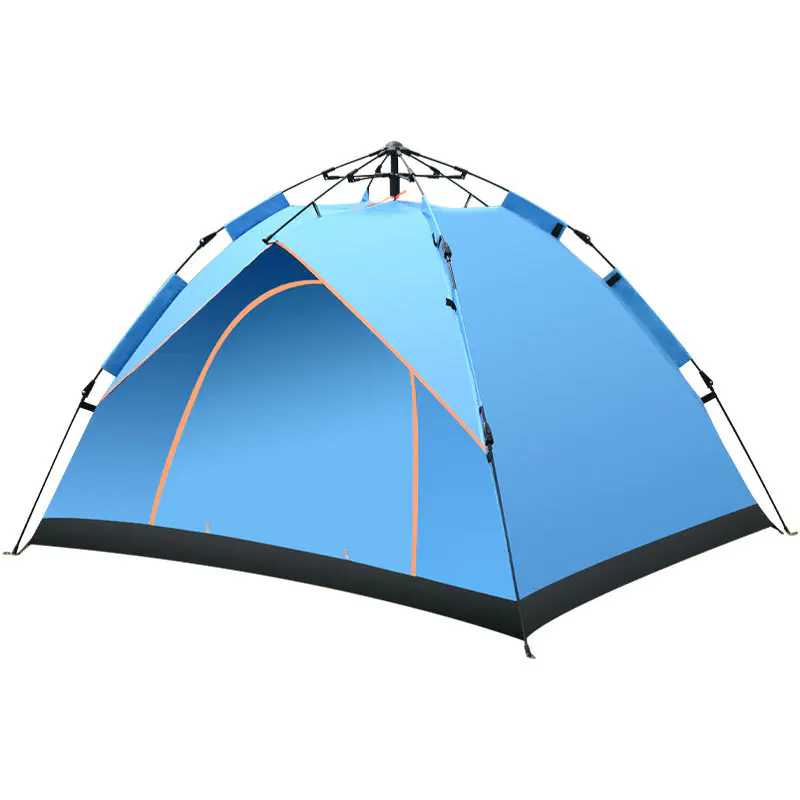
عربىThe weekend is short. Friday evening arrives with the car half-packed, the kids restless in the back seat, and a campsite that closes its entrance at a certain hour. Nobody wants to spend the first hour of that trip fighting tent poles in fading light, hunting for missing pegs, or reading setup instructions by phone flashlight. That frustration — and the time lost to it — is exactly what pushes so many casual campers toward the Camping Tent Automatic Pop Up category: shelters that open in seconds, stand on their own, and leave the rest of the evening free for the things that actually make camping worthwhile.
Why Weekend Camping Has Different Demands
Time Is the Resource You Cannot Get Back
A multi-week expedition camper has time to spare. They can spend an hour setting up camp, adjusting guylines, and organizing gear. Weekend campers do not share that luxury. A two-night trip offers maybe thirty-six to forty hours in total — subtract travel, cooking, sleep, and the return journey, and the actual margin for enjoying the outdoors shrinks fast.
Every minute spent struggling with a complex tent is a minute not spent around the fire, walking the trail, or doing nothing at all. For this kind of trip, setup and teardown efficiency is not a minor convenience. It is a meaningful part of the experience.
What Makes an Automatic Tent Different From a Standard One?
The Mechanism Behind a One-Second Open
Traditional tents rely on a system of flexible poles that must be threaded through fabric sleeves or clipped to the tent body, then bent into tension to create the structure. This takes practice, multiple steps, and both hands — sometimes two people. The whole process can easily run twenty to thirty minutes for an unfamiliar user.
An automatic pop-up tent uses a pre-stressed spring frame that is held compressed and locked during transport. When released, the frame springs into its full shape almost instantly, carrying the fabric with it. The structure goes from flat-packed to fully erect in a matter of seconds.
A few key points about how this works in practice:
The spring frame is built into the tent body, not a separate assembly
Opening requires releasing a latch or tie — no threading, no clipping, no assembly
The tent lands in a usable shape and generally needs only pegs for stability
Folding it back down takes more practice than opening, but can typically be done in a few minutes once the method is learned
The trade-off for this speed is that the structural design is fixed — you cannot adjust pole configuration or footprint. For weekend camping, this is rarely a limitation.
Is a Pop-Up Tent Genuinely Sturdy Enough?
Weather Resistance in Casual Camping Conditions
A common concern about automatic tents is whether the spring-loaded frame can hold up to wind and rain. The honest answer depends on the specific product and the conditions involved, but modern designs have improved considerably from early generations.
For weekend camping in typical conditions — moderate wind, rain that passes within a few hours, overnight temperatures that do not drop severely — a quality automatic tent handles the task well. The frame holds its shape under pressure because it is always under tension. There is no slack in the structure.
Where automatic tents show limitations:
- Sustained high winds in exposed sites — the fixed frame design offers less flexibility in staking configuration than a traditional freestanding tent
- Extended trips with frequent storms — the convenience features that suit casual use may not match the demands of a week-long mountainside camp
- Very tight packdown requirements — spring frame designs have a minimum folded diameter that is larger than a compressed pole-and-sleeve tent
For a campsite in a forest clearing, a designated camping ground, or a field with reasonable shelter from prevailing winds, the structural performance is entirely adequate.
How Does Setup Time Actually Change the Weekend Experience?
The Invisible Cost of a Slow Tent
Consider two arrivals at the same campsite. One group unpacks a traditional tent, spends twenty-five minutes assembling poles, arguing about which pole goes where, and re-pitching a section that came loose. The other group pulls out an Automatic Instant Pop Up Tent, releases the latch, stakes four corners, and sits down.
The second group has a functioning camp within minutes of arriving. The weather is still good, the daylight is still available, and nobody's mood has been eroded by frustration. That is not a trivial difference. Over a short trip, those twenty-odd minutes represent a real fraction of the usable time.
The same arithmetic applies at the end. Breaking camp on Sunday morning with a long drive ahead is a different experience with a tent that folds in minutes versus one that requires a careful, methodical teardown to avoid damaging poles or losing small parts.
Who Is the Automatic Tent Suited For?
Matching the Product to the User
Automatic pop-up tents are not the answer for every camping situation, but they fit a clear set of users well:
- New campers — no prior experience needed; the tent opens correctly every time without skill
- Families with children — kids can help set up without creating problems; the process is quick enough to hold short attention spans
- Solo weekend travelers — a one-person setup that does not require a second pair of hands to manage poles
- Festival campers — temporary shelter for a few nights that goes up and comes down without fuss
- Spontaneous trip planners — people who decide to go camping on short notice do not always have time to practice complex setup routines
- Car campers — the slightly larger folded diameter of a spring frame tent is no issue when it is going in the back of a car rather than a backpack
Traditional camping enthusiasts sometimes overlook automatic tents because they associate quick setup with lightweight construction or limited durability. That association is increasingly outdated. The current range of automatic camping shelters includes options with good weather protection, reasonable internal space, and durable materials suited to regular recreational use.
Tent Size and Configuration for Weekend Trips
Matching Capacity to Real Use
Weekend camping rarely requires the same shelter capacity as a base camp. Still, size selection matters for comfort, especially if the trip involves more than one night and the weather turns.
A few practical considerations:
- Solo trips — a two-person tent gives one person comfortable space to sit up, change, and store gear alongside the sleeping area. A one-person tent feels tight over two nights
- Couples — a three-person rated tent provides genuinely comfortable sleeping space for two with room for bags
- Families — automatic tents are available in larger configurations that accommodate a family of four, though these take slightly more space when folded and may take a few extra seconds to deploy
Headroom is worth factoring in. A tent you can only crawl into is fine for sleeping. If the trip involves rain delays or early mornings where people need to get dressed without standing outside, some internal height makes a difference to the experience.
Comparing Tent Types for Weekend Camping
Different shelter types suit different camping styles. Knowing where each fits helps match the shelter to the actual trip:
| Tent Type | Setup Time | Portability | Weather Resistance | Suited For |
|---|---|---|---|---|
| Automatic pop-up | Very fast | Good (car camping) | Moderate to good | Weekend trips, casual campers, families |
| Dome tent (traditional) | Moderate | Good | Good | General recreational camping |
| Cabin tent | Slow | Lower (bulkier) | Good | Extended stays, car camping with more space |
| Backpacking tent | Moderate | High (ultralight) | Good | Hiking trips where weight matters |
| Tarp shelter | Fast (with practice) | Very high | Variable | Experienced campers, minimalist setups |
For weekend trips where the priority is arriving, setting up quickly, and getting on with the experience, the automatic category covers the need without the trade-offs that come with cabin tents or the experience requirement of a tarp setup.
What to Look for When Choosing an Automatic Easy Outdoor Tent
Features That Make a Difference in Practice
Not all automatic tents are built to the same standard. A few features separate a frustrating product from a genuinely useful one:
- Waterproof rating of the rainfly and floor — a tent that leaks in rain is worse than no tent at all; check that the fabric is treated and that seams are taped or sealed
- Ventilation design — a tent that traps condensation inside makes for an uncomfortable night; mesh inner panels and vented fly designs manage moisture better
- Pegging points and guyline attachments — a tent that cannot be secured properly in wind is a liability; adequate anchor points matter even for casual use
- Carry bag design — an Automatic Easy Outdoor Tent that is difficult to repack defeats part of the purpose; a well-designed bag with clear folding instructions saves time and frustration at the end of the trip
- Inner door configuration — single-door designs are fine for solo use; two doors or a vestibule adds convenience for couples and families
Material weight also affects packability. Heavier fabrics last longer but add to the carry weight. For car camping this is a minor consideration; for anyone who needs to carry the tent any distance, it matters more.
Packing and Returning the Tent After the Trip
The Part That Catches New Users Off Guard
Opening an automatic tent is intuitive. Closing it is the step that confuses people who have never done it before. The spring frame must be collapsed in a specific sequence — typically folding the base in thirds to create a figure-eight or spiral shape — before it fits back into the carry bag.
A few practical notes:
- Practice the fold at home before the trip, not at the campsite on Sunday morning
- The fold requires both hands and a clear flat space; doing it on uneven or wet ground adds difficulty
- Once the sequence is learned, it becomes quick and repeatable — the challenge is only in the learning
This is the one area where automatic tents require more skill than traditional pole tents to operate correctly. It is a manageable learning curve, but not a zero-effort process.
Choosing a Supplier for Automatic Camping Tents
The weekend camping market has grown substantially, and the range of automatic tent products available through retail and wholesale channels reflects that growth. Quality varies considerably across price points and manufacturers, which makes supplier selection as important as product selection for distributors, retailers, and procurement teams sourcing at volume. Zhejiang Mansen Leisure Products Co., Ltd. develops and manufactures automatic pop-up tents and related outdoor leisure products for the recreational camping market. Their product range covers single, double, and family-capacity automatic tent designs with attention to weather resistance, ease of use, and packability suited to the weekend camping segment. If you are evaluating automatic tent products for retail distribution, seasonal procurement, or OEM development, reaching out to discuss product specifications, capacity options, and customization is a practical starting point for building a range that matches what casual and family campers are actually looking for.
