

 en
en  English
 Español
 русский
 Deutsch
 عربى
عربىYou have seen one set up in under a minute on a video and it looked effortless. Then the one you ordered took fifteen minutes to fold back down, leaked in moderate rain, and felt like a greenhouse by mid-morning. Choosing an Automatic Instant Pop Up Tent is not as straightforward as the marketing suggests, and buyers who skip the evaluation step often end up with a shelter that fits the advertising better than it fits the trip. The parameters that actually determine whether a quick-setup camping tent delivers on its promise are specific, and knowing which ones to check before purchase is what separates a good investment from an expensive disappointment.
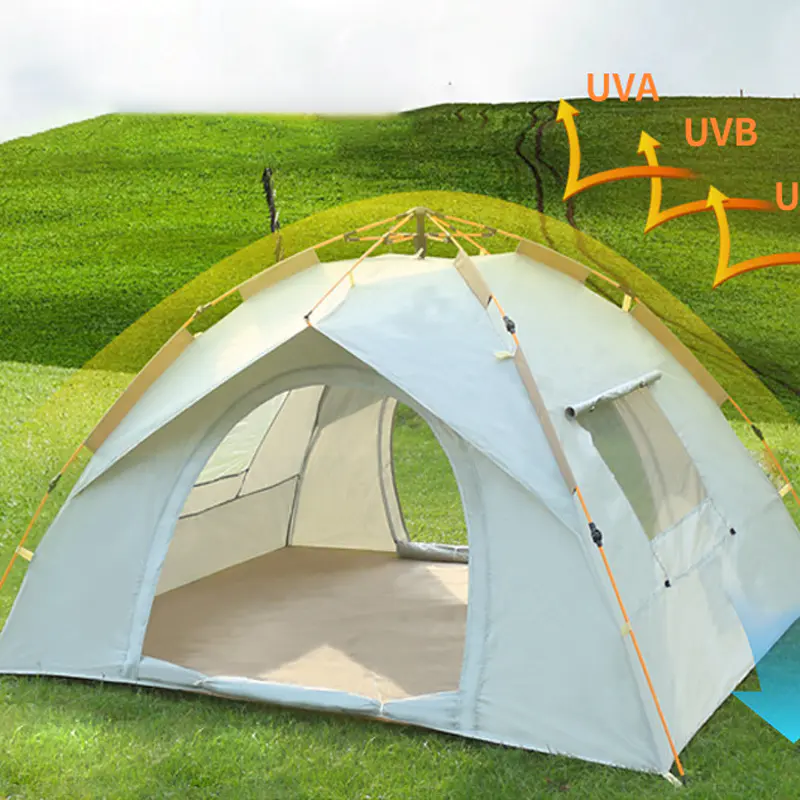
The market for Camping Tent Automatic Pop Up options has grown considerably, and the range of quality within that market is wide. Price does not reliably indicate performance. A higher-priced pop-up shelter is not automatically more waterproof or more durable than a mid-range alternative. What matters is whether the specific combination of capacity, setup mechanism, weather resistance, ventilation, frame construction, and packability lines up with how and where the tent will actually be used.
Capacity and Interior Space: Does the Stated Person Count Match Reality?
Tent capacity ratings are among the more consistently misleading specifications in the camping gear market. A figure listed on the packaging reflects a theoretical sleeping arrangement, usually calculated with very little margin for movement, gear storage, or comfort.
A tent marketed for a certain number of people will typically feel comfortable for fewer. Families with children need to account for sleeping bags, bags, and the reality that children move during the night. Two adults who want to actually sleep comfortably — rather than exist side by side — need to recalibrate the stated capacity against their actual needs.
What to evaluate beyond the headline number:
- Interior floor dimensions: Measure against the actual sleeping gear being used. Sleeping bags, sleeping pads, and pillows together take up more floor space than most buyers expect.
- Peak height: Low-profile pop-up tents save weight but create a claustrophobic experience for taller users. Check whether the peak height allows a seated position comfortably.
- Vestibule or porch space: Some quick-setup tents include a covered entrance area for gear storage. Tents without this feature require keeping muddy boots and wet gear inside the sleeping area.
- Interior pockets and organization: Small pockets along the walls add usable storage for phones, headlamps, and small items without consuming floor area.
The honest capacity of a pop-up shelter is usually the stated figure minus one. Buying up from that baseline is a reasonable strategy for most users.
How Does the Setup Mechanism Actually Work?
The defining feature of an Automatic Easy Outdoor Tent is its setup mechanism — the spring-loaded or pre-tensioned frame system that deploys the shelter without requiring poles to be inserted, connected, or threaded. But not all automatic mechanisms are created with the same quality of engineering, and the differences show up clearly when the tent is used repeatedly across a season.
Spring-Loaded Hub Systems
The most common automatic mechanism uses a central hub with pre-bent fiberglass or steel rods that snap into position when released from the carrying bag. Setup is genuinely fast — often under a minute for a single person. The limitation is that the pop-up geometry is fixed: the tent always deploys into the same shape, which limits the internal space efficiency compared to conventional pole designs.
What to Look for in the Mechanism Quality
- Resistance when opening: A well-engineered spring system deploys smoothly without requiring significant force. Mechanisms that need two people to open, or that feel unstable during deployment, suggest structural design problems.
- Hub material and joint construction: Metal hubs outperform plastic ones under repeated use. Check whether the joint points are reinforced and whether the rod attachment appears robust.
- Consistency across multiple setup cycles: A tent that sets up cleanly the first time but begins to resist or deform after several uses has quality control issues that will only worsen.
- How the automatic mechanism affects the fold-down: Some pop-up designs are fast to open and genuinely difficult to close. The fold-down process is part of the mechanism quality. Practice it before the trip, not during it.
The fold-down process is where many buyers encounter their first real frustration with this category. An Automatic Easy Outdoor Tent that takes longer to pack than a conventional tent of similar size is not delivering on its core promise.
Waterproof Performance: What to Actually Check
Waterproofing in camping tents involves several distinct elements, and a failure in any one of them will result in a wet interior regardless of how well the others perform. Marketing descriptions often highlight one aspect while leaving others vague.
The Three Waterproofing Elements to Evaluate
Rainfly coverage: A full-coverage rainfly extends to or near the ground on all sides, preventing rain from being driven under the fly and onto the tent body in windy conditions. Partial rainfly designs that cover only the roof are acceptable in calm, light rain conditions but perform poorly in storms or exposed campsites.
Seam treatment: Seams are the points where fabric panels are joined, and they are the most common entry point for water in tents that claim to be waterproof but still leak. Seam-sealed or seam-taped construction closes these gaps. Unsealed seams rely entirely on the fabric waterproofing holding under sustained pressure, which it typically does not.
Floor bathtub construction: The tent floor should extend partway up the walls before the seam joining it to the vertical fabric. This bathtub design keeps ground moisture from wicking through the floor-to-wall seam. Flat floor designs with a seam at ground level are particularly vulnerable to water ingress on wet or sloped ground.
Questions to Ask Before Purchase
- Is the rainfly full coverage or partial?
- Are the seams factory-sealed or taped?
- Does the floor have a bathtub cut or a flat cut?
- What is the fabric waterproof rating, and does it apply to both the fly and the floor?
A camping tent with strong fabric waterproof ratings but unsealed seams will leak in sustained rain. The weakest link in the waterproofing system determines the practical performance of the whole tent.
Ventilation Design: Why It Matters More Than Most Buyers Expect
Condensation is one of the most common complaints from tent users who expected to stay dry but woke up damp without any rain entering the tent. Condensation forms when warm air exhaled by the occupants meets the cooler inner surface of the tent fabric, depositing moisture on the walls and ceiling. Poor ventilation traps that warm, humid air inside.
An automatic pop-up shelter with limited ventilation options will produce condensation in any conditions where the interior temperature differs meaningfully from the exterior — which includes most camping situations.
Features that reduce condensation effectively:
- Mesh inner tent panels: Fabric that allows air to pass through reduces the moisture buildup against the inner tent walls. A tent with a solid fabric inner has nowhere for interior humidity to go.
- Vented rainfly: A fly with vents near the peak or at both ends allows air to circulate through the tent without opening the doors. This cross-ventilation moves humid air out before it can condense.
- Adjustable door and window openings: Multiple openings on different sides allow the user to orient ventilation toward the prevailing breeze. Single-door designs without windows have very limited ability to create airflow.
- Double-wall construction: A gap between the inner tent and the rainfly keeps condensation on the inner surface of the fly rather than on the sleeping area fabric.
Single-wall pop-up designs save weight and cost but concentrate the condensation problem. For three-season camping in environments with temperature variation between night and day, double-wall construction is meaningfully better at keeping the interior dry.
Frame Material and Structural Strength: What Holds Up Under Real Conditions?
The frame of an automatic pop-up tent is under constant tension when deployed. Wind, UV exposure, weight from rain pooling, and repeated setup cycles all stress the frame materials over time. Frame quality is directly related to the tent's service life and its ability to withstand conditions beyond a calm, dry evening.
Fiberglass vs. Steel Frames
Frame MaterialCharacteristicSuited ConditionLimitation
FiberglassLightweight, flexibleGeneral camping, calm to moderate windCan splinter under severe stress or impact
SteelHeavier, high strengthFamily camping, windy locationsAdds weight, may rust if coating is damaged
AluminumLight, strong, corrosion resistantBackpacking, extended useHigher cost, less common in pop-up designs
Hybrid (fiberglass and steel)Balance of weight and strengthGeneral outdoor usePerformance depends on where each material is used
What to Look for in Frame Construction
- Joint reinforcement at stress points, particularly where rods connect to the hub
- Rod diameter relative to the span being supported — thinner rods spanning longer distances deflect more under load
- Coating or finish quality on steel components, which affects corrosion resistance
- Whether replacement rods or hub components are available from the manufacturer
A frame that fails in the field is not just an inconvenience — it renders the shelter unusable. Checking frame construction quality before purchase is more useful than relying on warranty claims after the fact.
Packed Size and Carry Weight: Does It Actually Fit Your Transport Method?
Portability is a relative concept, and what qualifies as acceptably portable depends entirely on how the tent will be transported. A pop-up shelter that packs into a round carry bag and weighs several kilograms may be perfectly manageable for car camping and genuinely impractical for anything requiring it to be carried on foot.
Evaluating portability requires knowing the transport context:
- Car camping and drive-to sites: Packed dimensions matter less. Weight is manageable. Priority is quick setup and takedown to reduce campsite time.
- Short hike-in sites: Weight begins to matter. A shelter that packs to a round disc shape rather than a cylindrical or rectangular form is harder to attach to or fit inside a pack.
- Backpacking: Most automatic pop-up designs are not practical for extended foot travel due to their packed size and weight. Ultralight alternatives with conventional pole systems typically serve this context better.
Questions to answer before purchasing based on portability:
- How does the packed shape attach to or fit within your pack or vehicle?
- Is the carry bag durable enough for repeated use, or does it appear to be a single-season item?
- Does the packing process require a specific technique, and how difficult is it to master?
The fold-down and packing process for pop-up tents involves a specific technique — typically a figure-eight fold or a series of rotations — that takes practice to do confidently. Attempting it for the first time at the end of a camping trip in fading light is not the ideal learning environment.
What Common Mistakes Do Buyers Make When Evaluating Pop-Up Tents?
Some of the most frequent purchase regrets in this category follow from patterns that are consistent enough to be worth addressing directly.
Trusting the stated person capacity without adjustment: As covered above, the stated figure is rarely the comfortable sleeping capacity. Buyers who take it at face value frequently find the tent too small.
Ignoring the fold-down process: A tent that deploys in thirty seconds but takes fifteen minutes to pack is a daily frustration on a multi-night trip. Testing the pack-down before the trip is important.
Prioritizing setup speed over weather performance: The speed advantage of a pop-up shelter is useful in light conditions. In sustained wind and rain, a tent with weak waterproofing or poor stake-out points becomes a problem regardless of how fast it went up.
Not checking stake-out points: Many pop-up shelters have fewer and less robust stake-out options than conventional tents. In windy conditions, this matters. Check whether the tent has adequate guyline attachment points and whether pegs are included.
Assuming all pop-up designs fold down the same way: Each design has its own specific fold-down method. Not understanding the method before a trip is a common source of frustration.
A Pre-Purchase Checklist for Buyers
Running through a structured checklist before committing to a purchase reduces the risk of a mismatch between the tent and the actual use case:
- Actual interior dimensions confirmed against real sleeping gear
- Peak height checked against user height in seated position
- Setup mechanism tested or demonstrated, including the fold-down process
- Rainfly coverage confirmed as full or partial
- Seam treatment confirmed as sealed or taped
- Floor construction confirmed as bathtub or flat cut
- Ventilation evaluated for mesh panels, venting options, and door configuration
- Frame material and joint construction reviewed
- Packed dimensions and weight checked against transport method
- Stake-out points and guyline attachment reviewed for wind conditions
Buying With Confidence Starts With the Right Manufacturing Partner
For buyers sourcing Automatic Instant Pop Up Tents at volume — for retail, wholesale, or promotional programs — the manufacturing partner behind the product determines the consistency and quality that end users experience. A tent that performs well in a product sample and poorly in a bulk shipment reflects a quality control gap that only a reliable manufacturer can prevent. Zhejiang Mansen Leisure Products Co., Ltd. manufactures a range of Camping Tent Automatic Pop Up designs, including family-capacity and compact configurations, built for outdoor retailers, distributors, and private-label buyers. If you are evaluating options for an upcoming order, comparing specifications against application requirements, or looking for a manufacturing partner who can provide consistent product quality with supporting documentation, reaching out directly is the practical starting point. Matching the right tent design to the right end user is a conversation that starts with understanding the use case — and that is exactly where a capable manufacturer can add real value before the first order is placed.
