

 en
en  English
 Español
 русский
 Deutsch
 عربى
عربىAnyone who has wrestled with a pile of tent poles in the dark, fumbling through instruction sheets while the wind picks up, knows exactly how draining traditional tent setup can be. You planned a relaxing trip, not an engineering project. The frustration of misaligned poles, tangled sleeves, and forgotten stakes has driven more than a few campers to reconsider the whole adventure before it even starts. That is precisely where an Automatic Instant Pop Up Tent changes the equation — not just saving a few minutes, but fundamentally removing the barrier between arriving at a campsite and actually enjoying it.
Why Traditional Tent Setup Feels So Complicated
The Steps Keep Piling Up
Setting up a conventional tent involves a surprisingly long chain of tasks. Sorting poles by size, threading them through fabric sleeves, connecting sections, staking corners, attaching rainflies, adjusting tension — each step adds cognitive load and physical effort. For someone unfamiliar with camping or simply tired after a long drive, this sequence can feel genuinely overwhelming.
It is not that traditional tents are poorly designed. Many are sturdy and reliable. The issue is structural: they require the user to build the shelter from individual components, which means any missing part, any misread instruction, or any gust of wind at the wrong moment can unravel the whole process.
Two People, or Three Attempts
A recurring complaint among campers is that conventional tents often demand two people to set up efficiently. One person holds the poles upright while another secures the stakes. Solo campers, families with young children, or anyone camping without a dedicated partner quickly discovers how inconvenient this dependency becomes.
What Makes the Automatic Instant Pop Up Tent Different
A Pre-Engineered Frame Does the Work
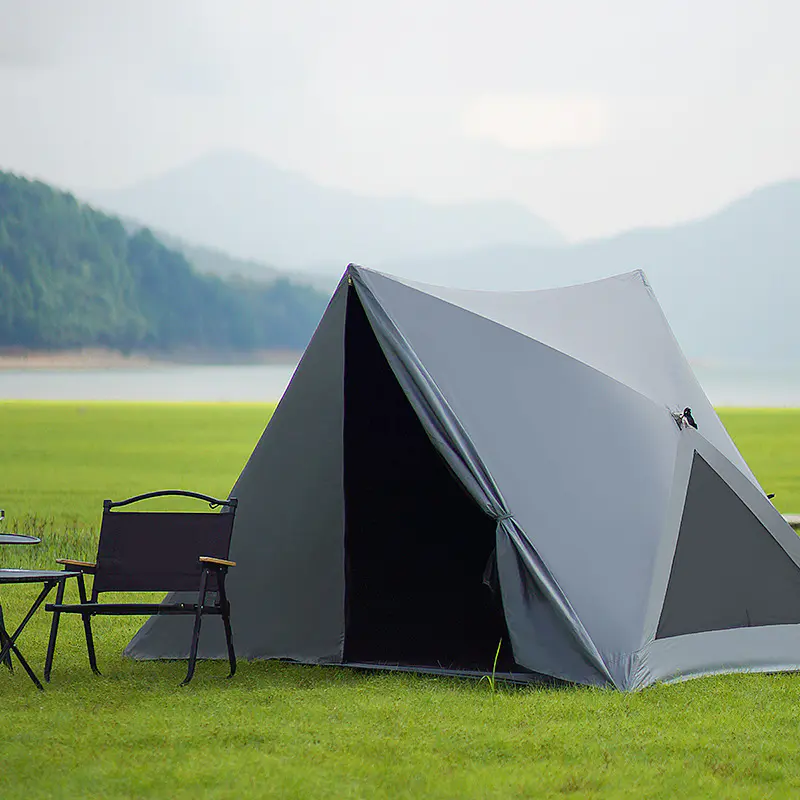
The defining feature of a camping tent automatic pop up design is a pre-attached, spring-loaded or hub-based frame system built directly into the tent. When the tent is released from its carry bag, the internal structure expands outward on its own. The user does not connect poles. There are no sleeves to thread, no sections to click together. The shape emerges almost entirely through the engineering baked into the product itself.
This is not a minor convenience tweak. It is a fundamental redesign of how shelter assembly works — shifting the effort from the camper to the manufacturer, where it belongs.
Seconds Instead of Steps
Where a traditional tent might require a dozen or more sequential actions, an automatic pop-up tent typically reduces that to three or four. Remove from bag. Allow the structure to expand. Stake the corners. Attach the rainfly if included. That is effectively the entire process for most models. The time difference between these two approaches is significant, especially across repeated camping trips or when conditions are not ideal.
A Practical Comparison: Traditional vs. Automatic Setup
| Setup Factor | Traditional Tent | Automatic Instant Pop Up Tent |
|---|---|---|
| Assembly steps | Many sequential steps | Few, largely automatic |
| Time to pitch | Roughly 10 to 20 minutes | Often under 2 minutes |
| People required | Two preferred | One person manageable |
| Learning curve | Moderate to steep | Very low |
| Suitable for beginners | Requires practice | Accessible immediately |
| Setup in low light | Difficult | Much more manageable |
The contrast becomes even clearer when campsite conditions are less than ideal. Fading daylight, wet ground, tired kids, or unexpected weather all amplify the frustrations of complex assembly. An automatic easy outdoor tent sidesteps most of these pain points by design.
Is This Product Really Suitable for Beginners?
Removing the Experience Barrier
One of the consistent themes among people switching to automatic pop-up designs is that it removed the intimidation factor entirely. Camping has a learning curve, and for newcomers, the tent setup step has historically been one of the steepest parts of that curve. When that barrier drops away, the rest of the experience — cooking outdoors, sleeping under stars, exploring nature — becomes far more accessible.
Families introducing children to camping, travelers who only camp occasionally, or anyone renting gear for a single trip all benefit from a product that requires no prior knowledge to operate correctly.
Solo Camping Becomes Genuinely Viable
For solo adventurers, the automatic pop-up format is particularly meaningful. Without a second pair of hands to hold things in place, conventional tents become a frustrating solo puzzle. A pop-up structure eliminates this dynamic. One person can pitch a shelter, manage their gear, and be settled in well before conditions deteriorate — a real advantage when camping alone in remote locations.
What Scenarios Benefit Most from Automatic Pop Up Designs
Weekend Trips and Drive-Up Campsites
Not every camping trip is a multi-day backcountry expedition. Many campers simply want to spend a night or two outdoors without investing significant time in logistics. For these shorter, convenience-focused trips, spending fifteen minutes on tent setup feels disproportionate. A camping tent automatic pop up solution lets the experience start immediately rather than after an administrative hassle.
Family Camping with Young Children
Parents camping with young children face a particular challenge: children need attention, supervision, and entertainment while adults are occupied with setup. The shorter the setup window, the less time spent managing competing demands. An automatic design compresses that window dramatically, freeing adults to focus on the people they came to spend time with rather than the equipment they brought along.
Festivals, Events, and Semi-Permanent Use
Outdoor events — music festivals, sports tournaments, weekend markets — often involve setting up and breaking down shelter repeatedly, sometimes across multiple days. In these contexts, the efficiency of an automatic easy outdoor tent compounds over time. Each setup and teardown that takes a fraction of the usual time represents real value, especially for vendors, event staff, or attendees managing multiple responsibilities.
Coastal and Weather-Exposed Locations
Beach camping and lakeside trips introduce additional variables: wind, sand, humidity, shifting light. These conditions make any setup process harder. An automatic design reduces the number of steps exposed to these variables, lowering the chance that weather intervenes before the shelter is secured.
How Does Packdown Compare to Setup?
The Fold-Down Process Explained
A common question among people considering automatic pop-up tents is whether the packdown process is as straightforward as the setup. The answer depends on the specific design. Some models use a simple twist-and-flatten fold that collapses the frame into a flat disc shape, which then fits into a circular carry bag. Others use a more traditional collapse method.
The fold-down step has a slightly steeper learning curve than the setup, but most users report that it becomes intuitive after one or two practice runs. Video demonstrations from manufacturers are widely available and helpful for first-time users.
Storage and Portability Considerations
Most automatic pop-up tents are designed to pack into compact carry bags, though the circular disc shape of some models requires more horizontal storage space than cylindrical tent bags. For campers with specific vehicle or backpack constraints, it is worth confirming that the packed dimensions suit their transport setup before purchasing.
Durability and Weather Performance
Built for Real Conditions
A question worth addressing directly: does the convenience of automatic deployment come at the cost of structural integrity? In well-manufactured models, the answer is no. The internal frame systems used in quality automatic tents are engineered to handle standard camping conditions, including moderate wind and rain. The fabric, zippers, and seam sealing matter just as much as they do in conventional tent designs.
Buyers evaluating these products should pay attention to pole material, fabric weight, and seam treatment — the same factors that determine durability in any camping shelter. The automatic mechanism adds convenience; it does not inherently reduce strength.
When to Be Realistic About Limitations
Automatic pop-up designs are well suited to recreational camping, family trips, and casual outdoor use. For extended wilderness expeditions in severe conditions, heavy-duty traditional tents with thicker poles and more robust structures may still be preferable. Knowing where a product fits within the broader landscape of camping gear helps buyers make decisions that align with their actual needs.
What to Look for When Evaluating Automatic Tent Options
Key Features Worth Examining
- Frame mechanism: Hub-and-pole versus spring-loaded systems offer different trade-offs in setup speed and stability.
- Waterproofing rating: Fabric coating and seam sealing determine how well the tent performs in rain.
- Ventilation design: Mesh panels and vents help manage condensation and airflow.
- Door configuration: Multiple entry points add convenience, particularly for families or larger groups.
- Carry bag design: Compact and durable packaging matters for transport and storage longevity.
- Stake and guy-line system: Secure anchoring remains important regardless of how quickly the tent deploys.
Sizing for Your Group
Capacity labeling in tent specifications tends to reflect the number of sleeping pads that fit rather than comfortable occupancy. Many experienced campers size up — choosing a tent labeled for more people than they plan to use it with — to allow space for gear storage alongside sleeping areas.
Why More Campers Are Moving Toward Automatic Designs
The shift toward automatic pop-up tents reflects a broader change in how people approach outdoor recreation. Camping is increasingly seen as a form of leisure, not a survival skill. People want the scenery, the fresh air, the connection with nature — not a technical challenge at the end of a long drive. Products that reduce friction in the setup process align naturally with that expectation.
Retailers, outdoor distributors, and camping equipment suppliers have all noted growing demand for user-friendly shelter solutions. The category has expanded significantly as manufacturers respond to a wider audience that includes casual weekend campers, urban families exploring the outdoors for the first time, and event organizers looking for practical, reusable infrastructure.
Closing Thoughts
Understanding how an Automatic Instant Pop Up Tent removes complexity from traditional camping setup is ultimately about recognizing what campers actually want from the experience. The mechanics — pre-attached frames, spring-loaded structures, minimal assembly steps — are the means. The outcome is more time for the parts of camping that matter: the meals, the conversations, the views, and the rest. For buyers sourcing camping shelter solutions at scale, whether for retail distribution, event rental, or outdoor hospitality, the automatic pop-up category represents a product direction that genuinely responds to what end users are asking for. If you are exploring sourcing options for this category, Zhejiang Mansen Leisure Products Co., Ltd. offers a range of camping shelter solutions worth evaluating — a manufacturer with focused production experience in the automatic pop-up tent space, positioned to support wholesale and custom requirements for buyers seeking reliable, scalable supply.
