

 en
en  English
 Español
 русский
 Deutsch
 عربى
عربىSetting up a traditional tent after a long drive or a day on the trail is rarely the experience people imagine when they plan a camping trip. The poles tangle. The instructions are unclear. Someone holds one end while another person threads the other, and the whole process consumes time that could have been spent doing something else entirely. The Automatic Instant Pop Up Tent exists specifically to remove this friction — not by simplifying a complicated process, but by replacing it with a structural approach that makes the assembly problem disappear almost entirely. Understanding how the design achieves this, and where it works well versus where it has limitations, gives buyers a clearer picture of what they are actually getting.
The ProblemWhy Traditional Tent Setup Feels So Complicated
The Steps That Add Up to Frustration
Traditional freestanding tents are not poorly designed — their pole systems are actually quite efficient for what they do. The problem is not the design itself. It is that the design requires the user to perform a series of interdependent steps correctly, in the right order, with coordination and spatial awareness that first-time users simply do not have yet.
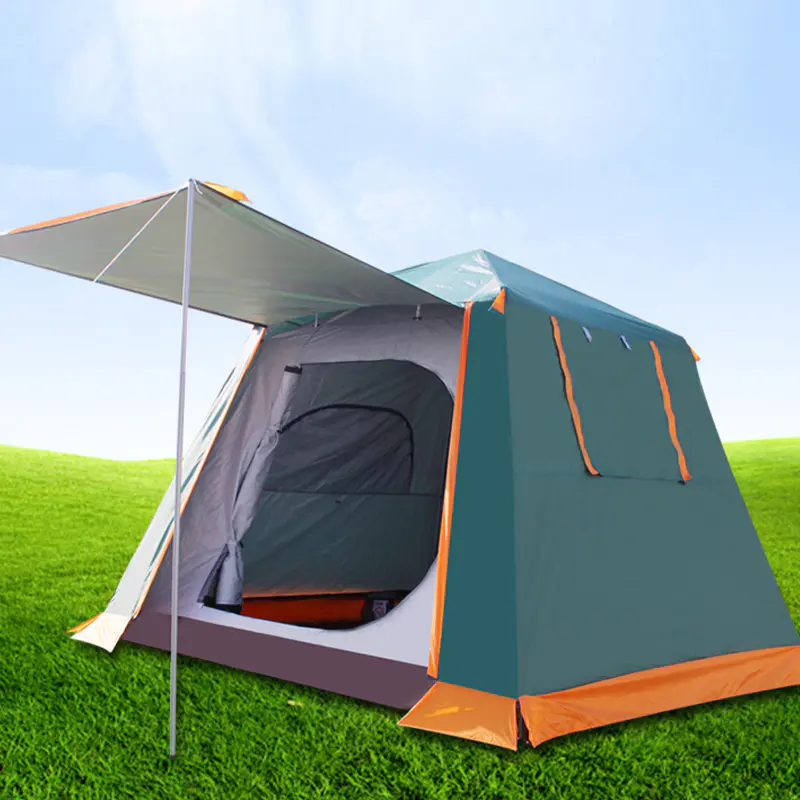
A standard two-person dome tent with a rainfly typically requires:
- Unpacking and identifying all components (poles, stakes, fly, footprint)
- Connecting pole sections in the right sequence without mis-threading
- Weaving or clipping poles through the tent body correctly
- Raising the structure while keeping it stable
- Attaching the rainfly with all hooks and tie-outs aligned
- Staking the base and guying out the fly for stability
Each step is manageable in isolation. Executed in sequence, in fading light, on uneven ground, by someone who has not done it before — the process becomes genuinely difficult. Camping Tent Automatic Pop Up designs bypass this by eliminating the assembly sequence entirely.
How It WorksWhat an Automatic Pop-Up Tent Actually Does
The Mechanism Behind the Instant Open
An automatic pop-up tent uses a pre-stressed spring frame rather than separate poles that must be assembled. The frame is manufactured in a compressed, folded state and held in that configuration by a closure mechanism — typically a buckle, a cinch cord, or a twist-lock tie. When the closure is released, the stored energy in the spring frame drives the tent into its fully erected shape in seconds.
There is no threading. No inserting poles into sleeves. No sequence of steps to follow. The user holds the packed tent, releases the closure, sets it down, and the structure opens on its own. Ground pegs can be inserted to secure the base and prevent the tent from moving in wind, but the tent is otherwise fully functional without them in calm conditions.
Setup ComparisonHow the Setup Comparison Actually Breaks Down
Traditional Tent vs. Automatic Tent: A Step-by-Step View
The setup difference between the two approaches is clearest when laid out as a direct step count and task comparison:
| Setup Stage | Traditional Dome Tent | Automatic Instant Pop Up Tent |
| Unpacking and component sorting | Yes — multiple separate parts | No — single packaged unit |
| Pole assembly and threading | Yes — multiple poles, multiple steps | No — frame pre-installed |
| Tent body raising | Yes — requires holding structure | No — self-erects on release |
| Rainfly attachment | Yes — alignment and clipping required | Integrated or minimal clips |
| Staking and guying | Yes — recommended for stability | Optional for basic use |
| Person required | Two preferred for ease | One sufficient |
| Skill or prior experience needed | Helpful | Not required |
The reduction in steps is not just about speed — it is about reducing the number of places where the process can go wrong. Every step in a multi-stage assembly is an opportunity for error. Fewer steps means fewer error points, which is why an Automatic Easy Outdoor Tent is accessible to users with no prior camping experience.
Additional BenefitsIs Setup Speed the Only Advantage?
Other Practical Benefits That Add to the Value
Speed gets the attention, but the practical advantages of the automatic format extend beyond how long the tent takes to open.
Best Use CasesWhere Do Automatic Tents Work Well?
Matching the Design to the Right Camping Context
Automatic pop-up tents are not suited to every camping scenario equally. Understanding where they perform well helps set appropriate expectations.
LimitationsWhere Automatic Tents Have Limitations
Being Honest About the Trade-Offs
No tent design is without constraints, and the automatic format trades some capabilities for its setup convenience.
Buying GuideHow to Choose the Right Automatic Tent Format
Key Decisions Before Purchase
Once the decision to use an automatic format is made, a few factors shape which specific configuration suits the application.
Scenario ComparisonScenario Comparison: Where Each Tent Format Fits
| Use Scenario | Traditional Tent | Automatic Instant Pop Up Tent |
| Backpacking (weight and size critical) | Suited | Limited by packed size |
| Drive-in car camping | Suited | Well suited |
| Family camping with children | Manageable | Well suited |
| Solo camping, no experience | Manageable with practice | Well suited |
| Music festivals, temporary stays | Workable | Well suited |
| Extended base camping | Suited | Suited for shorter stays |
| Harsh weather conditions | Wide range available | Product-dependent |
| Spontaneous overnight trips | Requires preparation | Well suited |
Folding ProcessUnderstanding the Folding Process Before You Need It
Why Practicing at Home Matters
The single piece of advice that applies to almost every automatic tent purchase is to practice the fold at home before the first trip. The technique is consistent and learnable, but attempting it for the first time in a campsite at the end of the day, with an audience and fading light, produces frustration that could have been avoided entirely.
The general fold sequence for most automatic tents involves:
- 1Lay the opened tent flat on the ground
- 2Bring one side of the base toward the opposite side, forming a taco shape
- 3Hold both rounded ends of the resulting crescent shape together
- 4Rotate one end toward the other until the tent forms a flat disc
- 5Secure the disc with the carry bag or the included bungee
Wholesale SourcingSourcing Automatic Tents for Retail or Distribution
For retailers, outdoor gear distributors, and wholesale buyers sourcing camping equipment at volume, product quality and consistency across production batches determine whether the automatic format delivers on its promise reliably or creates customer service issues. Zhejiang Mansen Leisure Products Co., Ltd. manufactures automatic pop-up tents and leisure outdoor products for recreational camping markets, with product development focused on frame durability, weather resistance, and pack-down reliability — the factors that determine whether a customer's experience matches what the product promises. Their range covers solo, couple, and family configurations with varied weather rating and feature levels suited to different retail price points and end-user contexts. If you are evaluating automatic tent products for a retail line, seasonal sourcing program, or OEM development project, reaching out to discuss product specifications, available configurations, and production capabilities is a practical starting point for building a product range that performs consistently in the hands of the campers who buy it.
