

 en
en  English
 Español
 русский
 Deutsch
 عربى
عربى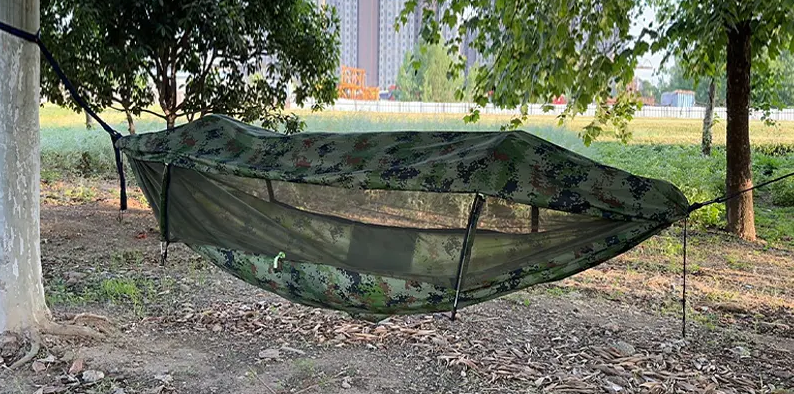
Camping Hammocks have become a familiar sight across many outdoor settings. What once appeared mainly as a leisure accessory is now often discussed as a functional resting structure with its own performance considerations. In conversations that touch on product development, field feedback, and usage patterns—sometimes involving industry participants linked to Zhejiang Mansen Leisure Products Co., Ltd.—attention frequently turns to suspension systems and the role they play in shaping real-world experience.
For Outdoor Camping Hammocks, performance is rarely defined by a single element. Fabric, shape, and environment all matter. Yet suspension systems quietly sit at the center of these interactions. They determine how the hammock behaves once weight is applied, how it responds to movement, and how it settles over time. Because of this, suspension design is often discussed less as an accessory and more as part of the core structure.
The Role of Suspension Systems in Camping Hammocks
At its most basic level, a suspension system connects the hammock body to its surroundings. In Camping Hammocks, this connection is not passive. It actively shapes how the structure performs from the moment it is set up.
Several roles tend to overlap here:
- Supporting weight without abrupt shifts
- Keeping the hammock balanced between attachment points
- Allowing the structure to adjust to uneven surroundings
These roles work together rather than separately. When one element is poorly matched, the overall experience may feel unstable or awkward, even if other parts are well designed.
In Outdoor Camping Hammocks, suspension systems often need to manage variation. Attachment points may not align evenly. Surfaces may differ in height or spacing. A suspension that can absorb these differences without forcing rigid positioning generally offers a smoother experience. This adaptability is often viewed as a baseline requirement rather than an advanced feature.
Common Materials Used in Hammock Suspension Systems
Material choice affects suspension behavior in ways that are not always obvious at first glance. Industry discussion around materials usually focuses less on appearance and more on how they behave during repeated outdoor use.
Some materials are valued for their softer interaction with surrounding surfaces. They tend to settle gradually and may feel more forgiving during movement. Over time, their behavior can shift slightly, which changes how tension is perceived during rest.
Other materials are chosen for consistency. Their response to load and movement remains more predictable across different environments. For Outdoor Camping Hammocks used in varied locations, this predictability can simplify setup and adjustment.
Rather than placing materials into strict categories of better or worse, industry observation often frames material selection as a matter of use context. The suspension material influences how force is managed, how movement feels, and how the hammock responds after extended periods of use.
Structural Design Approaches in Suspension Systems
Structure defines how suspension systems behave once in use. In Camping Hammocks, two general design approaches are commonly discussed: fixed structures and adjustable ones.
Fixed suspension designs offer stability through simplicity. Once placed, their length and tension remain unchanged. This can work well in familiar environments where attachment conditions are predictable. However, placement accuracy becomes more important, since adjustment options are limited.
Adjustable suspension designs introduce flexibility. They allow small changes to length or tension, which can make a noticeable difference in balance and comfort. From an industry point of view, this flexibility supports broader usability rather than convenience alone.
Structural design also affects movement response:
- More flexible structures tend to absorb motion gradually
- More rigid structures may transfer movement more directly
Neither approach is inherently right or wrong. Each shapes how the hammock behaves during entry, rest, and exit, often without changing the hammock body itself.
Influence of Suspension Systems on Stability
Stability is often one of the first things noticed when using Camping Hammocks. Suspension systems play a central role in how steady or unsettled the structure feels.
The way suspension lines are arranged affects lateral movement. Balanced layouts help the hammock settle evenly, while uneven tension can introduce subtle shifting. This movement may not be dramatic, but it can influence how secure the hammock feels during use.
Attachment spacing also matters. Wider spacing can change how the hammock curves, while closer spacing may affect how motion is distributed. In Outdoor Camping Hammocks, stability is not only about limiting movement. It is also about allowing natural motion without sudden changes.
Industry discussions often highlight that stability emerges from the interaction of several factors. Suspension structure, material behavior, and setup choices work together, making suspension systems a focal point when evaluating performance.
Suspension Systems and User Comfort
Comfort in Camping Hammocks is closely tied to how suspension systems manage tension. The suspension determines how the hammock supports the body and how weight is distributed during rest.
When tension is balanced, the hammock tends to follow the body's natural alignment. This reduces uneven pressure and allows the fabric to support rather than resist movement. Suspension systems that allow gradual adjustment often make this balance easier to achieve.
Comfort is also influenced by how the suspension responds to small shifts:
- Gentle responsiveness can support relaxed movement
- Abrupt resistance may feel restrictive over time
Adaptability to Different Outdoor Environments
Outdoor settings rarely offer uniform conditions. Suspension systems must respond to this variability in order to maintain performance.
In wooded areas, attachment points may be uneven or irregular. In more open spaces, positioning options may be limited. Suspension designs that allow adjustment help compensate for these differences, reducing the need for repeated repositioning.
Adaptability also affects how the hammock responds to environmental changes. Subtle differences in surface texture or spacing can influence tension and balance. In Outdoor Camping Hammocks, the suspension acts as the interface that absorbs these variations.
Installation and Adjustment Characteristics
Setup experience is closely linked to suspension design. Camping Hammocks with simpler suspension systems often allow quicker installation, while more adjustable designs may require extra attention during setup.
From an industry perspective, ease of adjustment is less about speed and more about accuracy. Suspension systems that allow controlled changes make it easier to achieve balanced positioning without repeated trial and error.
Common setup challenges include:
- Uneven attachment points
- Limited surrounding space
- Changes in surface height
Suspension designs that accommodate these conditions without complex steps tend to support more consistent outcomes in Outdoor Camping Hammocks.
Weight Distribution and Load Interaction
Suspension systems shape how weight moves through the hammock structure. In Camping Hammocks, this affects both comfort and overall behavior.
Even weight distribution helps maintain a stable shape. It supports consistent body alignment and reduces unwanted shifting. Uneven distribution, by contrast, may lead to tilting or localized tension.
The interaction between suspension lines and hammock fabric determines how force is transferred. In Outdoor Camping Hammocks, balanced load interaction contributes to predictable performance, especially when users change position during rest.
| Performance Aspect | Fixed Suspension Structure | Adjustable Suspension Structure |
|---|---|---|
| Setup behavior | Remains consistent once placed | Changes with adjustment |
| Environmental response | Limited flexibility | Adapts to variation |
| Movement handling | Direct and steady | Gradual and responsive |
| Position refinement | Depends on placement accuracy | Allows fine tuning |
| Usage range | Suits repeat settings | Suits varied settings |
Compatibility With Different Hammock Designs
Suspension systems do not exist on their own. They function as part of a larger structure, and their interaction with different hammock designs can noticeably influence performance. In Camping Hammocks, compatibility between suspension and fabric shape often determines whether the setup feels balanced or awkward.
Some hammock designs rely on a more defined curve. Others allow the fabric to spread more freely. Suspension systems that match these tendencies tend to support more natural positioning. When the suspension and hammock design are mismatched, users may notice uneven tension or restricted movement, even if each component performs well on its own.
From an industry standpoint, compatibility is less about standardization and more about interaction. A suspension that allows small adjustments can often adapt to a wider range of hammock styles. This flexibility reduces the need for precise alignment and supports broader use across Outdoor Camping Hammocks with differing structures.
Environmental Interaction and Surface Considerations
Suspension systems form the main point of contact between the hammock and its surroundings. Because of this, their interaction with natural surfaces has practical and ethical implications.
Surface contact varies widely:
- Smooth surfaces may allow suspension elements to shift more easily
- Rough surfaces may increase friction and limit movement
- Irregular surfaces can introduce uneven tension
In Camping Hammocks, how the suspension responds to these conditions influences stability and setup consistency. A suspension that distributes contact evenly tends to reduce localized pressure and helps maintain balance over time.
For Outdoor Camping Hammocks, responsible surface interaction is often discussed as part of broader outdoor practice. Suspension systems that minimize unnecessary stress on surrounding surfaces are generally viewed as more suitable for repeated outdoor use, even when conditions change.
Durability and Long-Term Use Perspectives
Durability in suspension systems is rarely judged by appearance alone. Instead, it is evaluated through repeated use and exposure to changing environments. In Camping Hammocks, suspension systems experience constant movement, tension changes, and environmental contact.
Over time, certain patterns tend to emerge:
- Areas under repeated movement may show gradual wear
- Adjustment points may experience more frequent stress
- Environmental exposure can subtly alter behavior
Industry observation suggests that durability is closely tied to how suspension systems manage motion rather than how rigid they appear. Systems that allow controlled movement often distribute stress more evenly, which supports longer usable life in Outdoor Camping Hammocks.
Maintenance considerations also come into play. Suspension systems that are easy to inspect and adjust tend to support more consistent performance over extended periods of use.
Industry Trends in Suspension System Development
Changes in suspension system design often reflect shifts in how Camping Hammocks are used rather than sudden innovation. Over time, industry discussions point toward gradual refinements focused on adaptability and user control.
Several tendencies are often noted:
- Greater emphasis on flexible adjustment
- Simplified structures that reduce setup uncertainty
- Designs that respond more smoothly to movement
Rather than aiming for complexity, many developments focus on making suspension behavior more intuitive. In Outdoor Camping Hammocks, this often translates into systems that feel easier to manage in varied conditions without requiring precise placement.
Practical Considerations for Outdoor Camping Hammocks
When evaluating suspension systems for Outdoor Camping Hammocks, industry observers often emphasize practical alignment rather than feature comparison. The goal is not to identify a single ideal system, but to match suspension behavior with intended use.
Key considerations often include:
- Typical outdoor settings and attachment conditions
- Desired balance between stability and movement
- Frequency of setup in unfamiliar environments
A suspension system that works well in one context may feel limiting in another. For this reason, flexibility and compatibility are often prioritized over fixed characteristics.
In Camping Hammocks, thoughtful suspension selection supports not only comfort and stability but also consistent performance across varied conditions.
Suspension systems shape how Camping Hammocks perform in ways that are both subtle and significant. They influence balance, comfort, adaptability, and interaction with the environment. While often less visible than fabric or structure, suspension choices define how the entire system behaves once in use.
For Outdoor Camping Hammocks, suspension design remains a central consideration as usage patterns continue to evolve. Rather than acting as a secondary component, the suspension functions as a guiding structure that connects the hammock to its surroundings. Its influence extends across setup, rest, and long-term use, making it a lasting focus in industry observation and discussion.
