

 en
en  English
 Español
 русский
 Deutsch
 عربى
عربى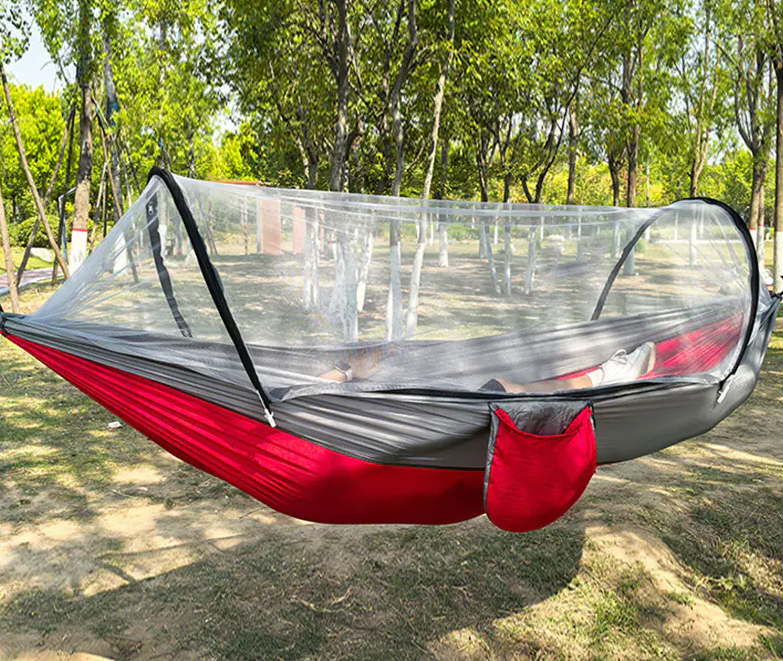
Structural and Environmental Factors Influencing Comfort in Heat
Outdoor Camping Hammocks are often discussed for their flexibility and ease of use, yet their behavior in warm conditions draws a different kind of attention. In industry exchanges that sometimes reference suppliers and observers connected to Zhejiang Mansen Leisure Products Co., Ltd., warm-weather comfort is less about insulation and more about how air, fabric, and structure interact once the hammock is suspended.
Unlike ground-based rest systems, a hammock remains exposed on all sides. Air moves underneath, around, and sometimes through the resting surface. This creates natural cooling potential, but it does not guarantee comfort. Subtle choices in structure, setup, and placement can either support that airflow or quietly restrict it. For Outdoor Camping Hammocks, warm-weather performance is shaped by many small decisions working together.
Thermal Behavior of Elevated Hammock Systems
Heat behaves differently when the body is lifted off the ground. In Outdoor Camping Hammocks, the absence of direct ground contact allows heat to escape downward, carried away by moving air. This passive cooling effect is one of the reasons hammocks are often favored in warm environments.
At the same time, elevation introduces exposure. Without careful setup, warm air can linger around the body, especially in still conditions. The hammock does not create heat on its own, but it can either release or hold it depending on how freely air is allowed to circulate.
Industry observation often notes that comfort in heat is not defined by a single feature. It results from the combined behavior of fabric, shape, and surrounding space. When these elements work in balance, the hammock remains usable even when temperatures feel heavy and slow to change.
Key Structural Elements That Shape Airflow
Several core elements determine how Outdoor Camping Hammocks manage airflow. These elements are often discussed together rather than in isolation, because their effects overlap.
Key considerations include:
- How much of the body is in direct contact with fabric
- Whether air can pass through or only around the hammock
- How tension shapes the internal space
A hammock with wide surface contact may feel supportive but can reduce airflow along the back. Designs that introduce space around the body tend to release heat more easily, though they may feel less enclosed.
Structure does not need to be complex to be effective. In many cases, small design choices quietly influence whether air continues to move or becomes trapped during rest.
Hammock Body Configurations and Heat Response
Different hammock body styles show distinct responses to warm conditions. Outdoor Camping Hammocks with continuous fabric bodies tend to offer balanced performance. They provide consistent support and moderate airflow, depending on weave and tension.
More open constructions, including those with partial openings or spaced structures, encourage greater air movement. Heat escapes quickly, reducing the chance of a warm pocket forming beneath the body. However, this openness can feel less uniform against the skin, especially during longer periods of rest.
Hybrid designs attempt to bridge these differences. Solid areas maintain structure, while open sections allow heat to escape. From an industry standpoint, these configurations reflect an effort to balance airflow with stability rather than prioritize one at the expense of the other.
Fabric Properties in Warm Outdoor Conditions
Fabric choice strongly influences how Outdoor Camping Hammocks behave in heat. Breathability, moisture response, and surface feel all shape comfort during warm nights.
Looser fabric constructions allow air and moisture vapor to move through more freely. This supports cooling but may reduce resistance to shifting air or light exposure. Denser fabrics feel more contained, yet they may slow heat release.
Moisture behavior also matters. In humid conditions, fabrics that release moisture quickly tend to feel drier against the skin. Slower-drying materials may remain damp longer, which can affect comfort even when air temperature drops.
Rather than viewing fabric properties as fixed advantages, industry discussion often frames them as situational. The same material may feel comfortable in one environment and less so in another.
Shape, Lay Style, and Their Effect on Ventilation
The way a hammock hangs shapes the internal air space. Outdoor Camping Hammocks that allow a flatter resting position often create more room for air to move along the sides and beneath the body.
Curved hangs bring the fabric closer around the body. This can feel secure, but it may reduce airflow in certain areas. Angled resting positions, where the body lies slightly across the hammock rather than straight along its length, often open small gaps near the ends that support ventilation.
Shape is not only a design feature. It is also influenced by setup choices. Tension, spacing, and attachment height all affect how the hammock settles and how air moves once weight is applied.
Height and Spacing in Setup Configuration
Setup plays a quiet but critical role in warm-weather comfort. Outdoor Camping Hammocks positioned higher above the ground tend to capture more ambient air movement. Even light breezes become noticeable when the hammock is lifted into open space.
Spacing between attachment points affects tension and curvature. Wider spacing often results in a flatter lay, which can support better airflow. Narrower spacing increases curvature and may limit how freely air moves beneath the body.
These setup choices are rarely fixed. Users adjust them based on available space, tree placement, and environmental conditions. From an industry perspective, adaptability in setup supports more consistent comfort across different locations.
Overhead Coverage and Its Thermal Impact
Overhead protection changes the thermal behavior of a hammock system. Tarps or covers shield against exposure, but they also influence airflow.
When placed too close, overhead layers can block rising warm air, creating a pocket of trapped heat. Higher placement leaves room for circulation and allows heat to dissipate more naturally.
Material appearance also plays a role. Lighter surfaces tend to reflect more environmental heat, while darker ones may hold warmth longer after sun exposure. In Outdoor Camping Hammocks, these effects are subtle but noticeable over time.
Open-ended coverage often supports better airflow than fully enclosed setups. In warm, stable conditions, minimal coverage may offer the most comfortable balance.
| Hammock Feature Type | General Construction Style | Airflow Behavior | Heat Retention Tendency | Warm-Weather Suitability |
|---|---|---|---|---|
| Continuous Fabric Body | Single, uniform fabric surface | Moderate circulation | Moderate retention | Context dependent |
| Partially Open Design | Fabric with ventilated sections | Freer air movement | Lower retention | Often favorable |
| Spaced Structure | Open cords or gaps | Strong circulation | Minimal retention | Effective in dry heat |
| Layered Construction | Multiple fabric layers | Restricted airflow | Higher retention | Less suitable |
| Thin Single Layer | Lightweight continuous fabric | Open circulation | Lower retention | Commonly effective |
Under-Layer Considerations in Warm Conditions
In warm environments, many Outdoor Camping Hammocks are used without additional layers beneath the body. The open underside allows heat to escape freely, which supports cooling.
When a thin layer is used, usually for comfort or protection, its breathability becomes important. Materials that trap air underneath the hammock reduce the natural cooling effect created by elevation.
Industry observation suggests that warm-weather setups often favor simplicity. Removing unnecessary layers allows the hammock to function as intended, relying on airflow rather than insulation.
Ventilation Through Integrated Accessories
Accessories can either support or restrict airflow. Bug protection made from open mesh allows air to move freely while maintaining comfort. More enclosed designs may block circulation, especially when air is still.
Some setups include small aids to encourage movement of air. These additions may help during calm nights, but natural airflow remains the primary factor shaping comfort in Outdoor Camping Hammocks.
Careful integration of accessories ensures that airflow paths remain open rather than obstructed by attachments or closures.
Environmental Placement and Microclimate Effects
Where you actually hang the hammock can change everything in hot weather. Outdoor Camping Hammocks do best when they catch even a small breeze. Open clearings, spots near a stream, or up on a gentle ridge usually have a bit of air moving. It doesn't have to be strong wind—just enough flow to pull heat away from your body.
Shade makes a real difference too. Pick a place under thick tree cover during the day and the fabric stays much cooler by evening. People sometimes skip over this detail, but once you've lain down in a sun-baked hammock versus one that stayed in the shade all afternoon, you notice it right away. The whole setup feels warmer from the start if the material has been soaking up heat.
Tree spacing and height matter more than most people think at first. Wider gaps let you hang the hammock flatter, which leaves plenty of open air underneath and along the sides. Closer trees force a sharper curve, and that curve tends to trap warm air right where you're lying. A small tweak in how far apart the trees are—or how high you tie the ends—can turn a sticky night into one where you actually sleep well.
System-Level Coordination in Hot Weather
Comfort in hot weather isn't about any single piece being perfect. Outdoor Camping Hammocks feel right when the body, suspension, overhead cover, bug net, and little extras all work together instead of fighting each other.
- Mesh panels or open sections in the fabric let air pass through and around you
- Suspension tension and the way you hang it control how much breathing room there is inside
- Tarps or rain flies can block airflow if they sit too low or get pulled too tight
Bug nets, thin pads, gear pockets—anything added shouldn't close off the natural wind paths
When everything lines up, air keeps moving freely. But one part out of place—like a tarp hung too close or a net fitted too snug—can hold heat in even when the rest of the setup is thoughtful. It's usually the little mismatches that make the biggest difference on muggy nights.
Supply-Side Observations from Hammock Wholesaler Channels
Feedback coming back through Hammock Wholesaler networks shows what people really pay attention to when it's hot. A few things keep coming up again and again:
- Ventilated fabrics and bigger mesh panels move quickly off the shelves
- Adjustable suspension gets mentioned a lot because it lets people dial in a flatter hang for better airflow
- Buyers talk about location almost as much as the product itself—tree height, sun exposure, whether there's any breeze at the site
Wholesalers notice that customers in consistently warm areas get picky about small details. The spacing between cords, how large the mesh openings are, how much adjustment range the straps or lines have—those little things end up making the hammock feel noticeably cooler or warmer. That kind of real-use input often shapes what stays in stock and what gets suggested most.
Practical Alignment Between Climate and Hammock Choice
Picking a hammock for hot conditions means weighing a handful of priorities. Outdoor Camping Hammocks built with heat in mind usually include:
- Open weaves, mesh inserts, or cut-out sections so air can circulate freely
- Suspension that's easy to adjust so you can create a flatter or slightly diagonal lay
- Very little—or no—extra under-layer to avoid trapping heat underneath
There are always compromises. Extreme ventilation can leave you more exposed to wind or light rain. Denser materials give better support and last longer but hold warmth more easily. The smart choice comes down to what the trip will probably be like—high humidity, steady breeze or dead calm, strong sun all day—and then matching the hammock features to that picture.
Broader Industry Observations
Conversations across the industry have been leaning more toward warm-weather comfort lately. A few clear patterns stand out:
More designs now include dedicated ventilation features—mesh panels, open ends, breathable weaves
There's growing interest in setups that adapt easily to whatever campsite you end up with
People pay closer attention to how fabric choice, suspension style, and hang geometry work together to keep air moving
Durability and pack size still matter, but they're no longer the only things that get talked about. How well a hammock handles heat, interacts with airflow, and adjusts to different sites has become a big part of what makes one feel "good" in summer conditions.
In the end, staying comfortable in warm weather comes from how all the pieces fit together—fabric, shape, suspension, cover, and exactly where you hang it. Sometimes it's just a small change: raising the ridgeline a few inches, leaving a mesh panel fully open, adjusting the tarp height. Those tweaks can open up airflow and drop the perceived temperature more than you'd expect.
A setup that gets the balance right—enough ventilation, solid stability, basic weather protection, and room to tweak on site—tends to handle hot nights reliably. Feedback from Hammock Wholesaler channels keeps showing the same thing: practical stuff like airflow and smart placement often matters as much as (or more than) fancy materials or super-low weight.
For summer camping, paying attention to how air actually moves around and through Outdoor Camping Hammocks usually means cooler nights and better rest.
