

 en
en  English
 Español
 русский
 Deutsch
 عربى
عربىRooftop camping gear sits in a supply chain that stretches across factories, distributors, and retail channels. In the middle of that chain, a Rooftop Tent Wholesaler is usually the one handling bulk movement and deciding how different product styles are spread across markets.
It is not just about shipping boxes from one place to another. Small decisions about structure, fabric choice, or even packaging can shift how the product performs once it reaches users. Because of that, conversations between production side and buyers often start earlier than expected.
Demand also does not stay fixed. It shifts with travel habits, weather patterns, and even how people use vehicles for outdoor trips. That is where wholesale coordination quietly matters.
What Rooftop Tent Wholesaler Means in Outdoor Supply Chains and How It Works
A Rooftop Tent Wholesaler usually sits between production and resale channels. Instead of dealing with individual customers, the focus is on grouping products, matching them with regional demand, and making sure the flow does not break between factory output and market needs.
Products are made first, then sorted based on demand signals from different buyers. After that, they are packed into larger shipment batches and sent out through various logistics paths.
There is also a timing element. Factories work on their own schedules, but markets move differently. Sometimes demand comes earlier than expected in one region while another slows down. The wholesale layer tends to smooth that gap instead of letting it turn into supply pressure.
| Stage | What happens | Focus |
|---|---|---|
| Production | Items are manufactured | Build consistency |
| Wholesale handling | Orders are grouped and assigned | Distribution flow |
| Retail side | Products reach sellers | Market access |
Which Rooftop Tent Designs Are Commonly Chosen in Wholesale Supply for Different Markets.
| Design type | What it feels like in use | Where it fits |
|---|---|---|
| Foldable structure | Easy to store and move | Limited space users |
| Hard shell style | Compact outer protection | Frequent travel use |
| Soft structure | More flexible interior | Longer stays outdoors |
| Mixed build | Balanced behavior | General use cases |
How Rooftop Tent Materials and Frame Structure Affect Wholesale Product Performance Expectations
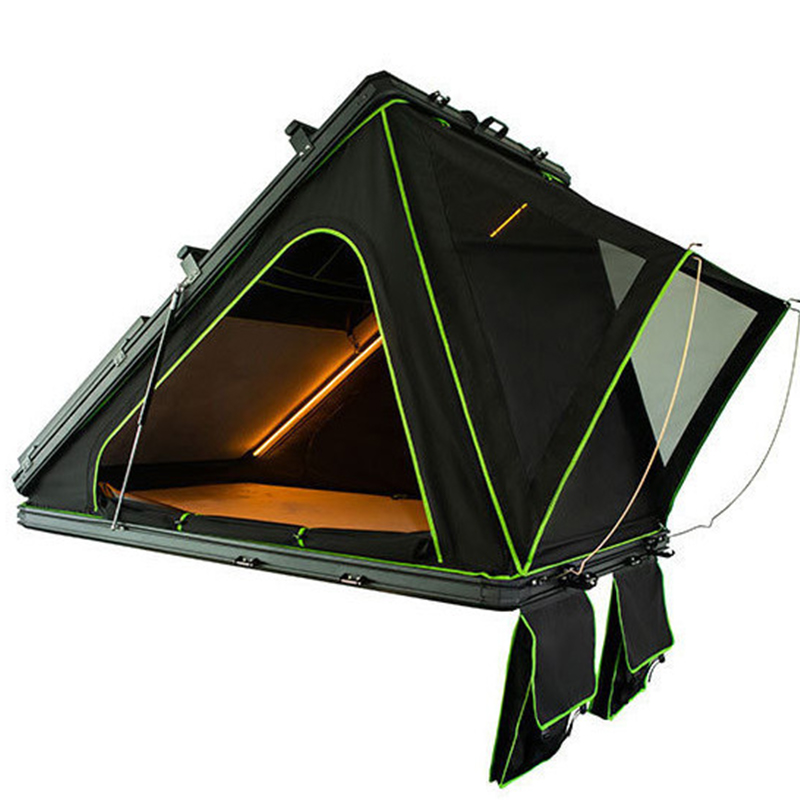
Material and structure tend to decide how the product behaves in real conditions. Fabric thickness, coating type, frame rigidity, and joint design all interact in ways that are not obvious at first glance.
If one part is too weak, the rest of the structure usually shows it during repeated use. On the other hand, a balanced setup feels more stable even when conditions are not ideal.
Buyers often care less about isolated specifications and more about how everything works together after multiple cycles of use. Opening, closing, vibration during transport, and exposure to weather all become part of the evaluation.
A Rooftop Tent Wholesaler usually pays attention to how these elements hold up in combination rather than individually. That is where real performance differences tend to show.
What Rooftop Tent Wholesaler Buyers Look for When Selecting OEM and ODM Partners
In real purchasing decisions, the focus is rarely on a single feature. It is more about how flexible the production side is when changes are needed.
Some buyers adjust fabric type or frame details depending on their market. Others want changes in appearance or packaging so the product fits their own selling channels. If the production partner cannot adjust without friction, the cooperation often becomes harder to maintain.
Communication also plays a role. Small misunderstandings early on tend to turn into larger issues later in production cycles. Because of that, clarity during early discussions is usually more important than polished presentations.
What tends to matter most is simple:
- whether adjustments are manageable without restarting the process
- whether material changes are realistic within production flow
- whether packaging can shift depending on channel needs
- whether timing can follow order rhythm instead of forcing it
When these align, cooperation feels smoother on both sides.
How Rooftop Tent Wholesaler Pricing Models Influence Long Term Buying Decisions
Pricing in rooftop tent wholesale is rarely stable in a simple way. It changes with order size, product configuration, and even small adjustments in structure or materials. For buyers, the focus is often less on a single quote and more on how the cost behaves when cooperation continues over time.
In many cases, discussions with a Rooftop Tent Wholesaler are not only about unit price. They also touch on how flexible the pricing feels when something is adjusted during production. Two products that look similar on paper can end up with different cost logic once details are changed.
What buyers usually try to read is not just the number, but the pattern behind it. If the pricing feels consistent across repeat orders, planning becomes easier on their side.
Why Packaging and Shipping Methods Matter in Rooftop Tent Wholesale Distribution
Packaging is often treated as part of the product in rooftop tent logistics. The structure is large, and even small pressure during transport can affect how it opens or closes later. Because of that, packaging design is not just protection, it is also about keeping the product behavior stable from factory to final arrival.
Shipping methods add another layer to this. A Rooftop Tent Wholesaler usually deals with different transport routes, and each one brings its own handling conditions. What happens during loading, stacking, and transfer can influence the final condition more than expected.
Packaging decisions are often shaped by a few practical points:
- how tightly the structure fits inside the outer carton
- how much movement is possible during long distance transport
- whether corners and joints are properly supported
- how easy it is to unload without stress on the frame
These details may look small, but they tend to decide whether the product arrives in a ready condition or needs extra adjustment before use.
Where Rooftop Tent Wholesale Demand Is Growing and What Drives Market Interest
Demand for rooftop tents tends to appear in regions where outdoor travel is part of normal leisure habits. It is often connected to how people use vehicles outside of daily commuting, especially when longer trips or open road travel are common.
Interest does not grow in a straight line. It usually builds gradually as outdoor activities become more frequent and travel patterns shift. Once people start using vehicles for short camping or road-based stays, the product naturally becomes more visible in those markets.
A Rooftop Tent Wholesaler often sees this demand linked more to lifestyle behavior than to product changes themselves.
How Rooftop Tent Wholesaler Cooperation Plans Are Built Between Manufacturers and Distributors
Cooperation planning between manufacturers and distributors usually develops in stages rather than a single fixed agreement. Early conversations tend to focus on product range and how flexible the structure can be when adjustments are needed later.
Once that direction is clearer, the discussion often moves into how orders are arranged and how supply will move through different channels. Timing becomes important here, especially when multiple buyers depend on the same production flow.
A Rooftop Tent Wholesaler often plays a role in connecting these steps, helping both sides align expectations before production scales up.
| Cooperation element | What it involves | Why it matters |
|---|---|---|
| Product alignment | Choosing models and structural options | Keeps supply aligned with market needs |
| Order planning | Setting batch structure and mix | Helps production stay organized |
| Packaging approach | Adjusting protection and format | Reduces handling issues during transport |
| Timing coordination | Matching production flow with delivery needs | Keeps supply movement steady |
The process usually stays flexible. It adjusts based on how demand shifts and how production capacity responds, rather than following a fixed pattern.
