

 en
en  English
 Español
 русский
 Deutsch
 عربى
عربى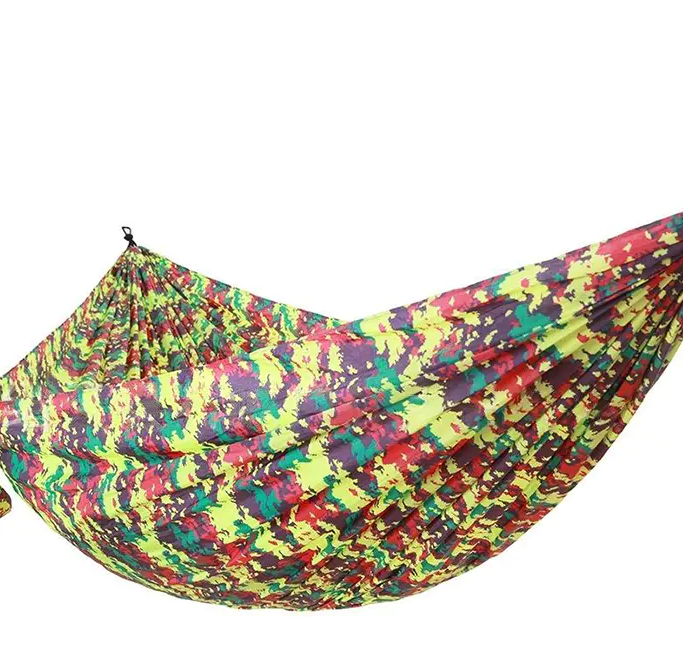
How Does a Hammock Function As a Suspended Resting System
A Hammock looks simple, but its operation relies more on overall stress balance than on the strength of a single structure.
From a practical perspective, it can be broken down into several key points:
- The two end anchor points provide basic tension support.
- The fabric in the middle forms a natural curve under gravity.
- Body weight is distributed across the entire fabric surface, rather than concentrated at a single point.
- The hanging angle affects overall comfort.
The performance of this structure will vary in different environments. For example, slight changes in the distance between the anchor points will alter the overall sinking and wrapping sensation.
In some supply chain stages, Hammock Wholesalers also differentiate structural types based on usage scenarios, as different uses have different stability requirements.
What Defines Regular Hammock Usage In Everyday Environments
Hammocks used in everyday environments have relatively fixed usage patterns and are more geared towards "long-term placement."
Common characteristics can be understood as follows:
- Mostly installed in patios, balconies, or shaded areas.
- Not frequently moved after installation.
- Minimally affected by changes in wind and humidity.
- Usage time is usually flexible, not relying on complex adjustments.
From a structural experience perspective:
- The fabric is relatively soft, conforming more closely to the body.
- Airflow is more natural, preventing stuffiness.
- The hanging position is relatively stable, requiring less frequent re-tying.
These types of Hammocks are more like an extension of the environment than a means of transportation.
How Outdoor Camping Hammocks Adapt To Changing Natural Conditions
The logic behind Outdoor Camping Hammocks is completely different from everyday models, leaning more towards "adjusting to changes in the environment."
The main differences can be categorized into several aspects:
- The usage location is not fixed, requiring frequent reinstallation.
- The spacing and height difference between trees vary significantly.
- Wind direction and ground conditions are unstable.
- Quick disassembly and readjustment are required.
Therefore, the structural design is usually adjusted:
- The overall width is slightly narrower to reduce wind impact.
- The mounting straps are more flexible, adapting to support points of different diameters.
- The storage volume is smaller, making it easier to carry.
- The connection structure emphasizes rapid adjustment capabilities.
In this usage mode, the Hammock is more like a "mobile rest system."
How Do Structural Differences Affect Hammock Performance
From a structural perspective, the differences between the two types of Hammocks mainly lie in the force distribution and shape control.
This can be broken down into the following points:
- Traditional Hammocks: Rely more on natural drape to create a comfortable curve.
- Outdoor Hammocks: Rely more on tension to maintain a stable shape.
- Different widths → Affect the wrapping feel and freedom of movement.
- Different tensions → Affect the distribution of body support.
Simple comparison:
- Wideer constructions prioritize a more relaxed experience.
- Tighter constructions prioritize stability and control.
In product distribution, Hammock Wholesalers typically adjust their structural combinations based on different market demands.
How Does Fabric Selection Influence Comfort and Durability?
Materials are one of the core factors influencing the Hammock experience. Different environments require different fabric choices.
Common differences are as follows:
Usual Hammock Material Characteristics:
- Softer touch
- More natural breathability
- Slower drying speed after absorbing moisture
- More suitable for stable environments
Outdoor Camping Hammock Material Characteristics:
- Emphasis on structural stability
- More noticeable moisture resistance
- Less prone to deformation after repeated folding
- More suitable for changing environments
From an experience perspective:
- Softer materials → More relaxing
- Structural materials → More stable
These are not a matter of superiority or inferiority, but rather different usage environments.
How Suspension Systems Differ Between Hammock Types
The differences in suspension systems are often the most noticeable to users.
They can be broken down into:
Daily Hammocks: Primarily use fixed ropes; relatively stable mounting points; fewer adjustments needed; rely on fixed structures (such as posts or tree trunks).
Outdoor Camping Hammocks: Wide-bandage structure; adaptable to supports of different diameters; more frequent adjustments; emphasize quick assembly and disassembly.
The key difference lies in:
- Daily models → Fixed usage logic
- Outdoor models → Adaptable to changing circumstances.
How Portability Changes the Way Hammock Is Used
Portability directly changes the usage scenarios of Hammocks.
Hammocks can be categorized as follows:
Daily Use Hammocks
- Larger size
- Simpler storage method
- Mostly used in fixed spaces
- Low movement frequency
Outdoor Camping Hammocks
- Compressible storage
- Suitable for carrying on your back
- Use in conjunction with outdoor gear
- Suitable for long-distance travel
Simply put:
- Daily Use Hammocks = Furniture attributes
- Outdoor Camping Hammocks = Travel gear attributes
How Does Installation Method Reflect Usage Environment
The installation method reflects the stability of the usage environment.
Daily Use Environment:
- Fixed location is known
- Highly repetitive installation process
- Minimally adjusted
- More focused on "setup for long-term use"
Outdoor Use Environment:
- Each installation environment is different
- Requires reassessment of spacing
- More frequent adjustments
- More reliant on experience
The design focus for Outdoor Camping Hammocks here is "adaptability".
How Do Weather Conditions Influence Hammock Performance
The impact of weather changes on Hammocks is usually gradual.
Several factors can be considered:
- Wind direction changes → affect the range of motion
- Humidity changes → affect fabric condition
- Temperature changes → affect comfort
- Environmental obstruction → affects stability
Daily wear is typically used in relatively stable environments, so changes are less significant.
Outdoor Camping Hammocks, however, need to withstand more frequent environmental changes.
| Dimension | Regular Hammock | Outdoor Camping Hammocks |
|---|---|---|
| Usage Environment | Stable Indoor Or Backyard Spaces | Natural And Changing Outdoor Environments |
| Structural Logic | Comfort Focused Design | Adaptability Focused Design |
| Material Direction | Soft And Breathable Fabrics | Stable And Durable Materials |
| Installation Method | Fixed And Repeated Setup | Flexible And Adjustable Setup |
| Carrying Method | Home Storage Or Stationary Use | Portable For Outdoor Travel |
How Outdoor Camping Hammocks Handle Environmental Pressure
The performance of Outdoor Camping Hammocks in natural environments largely depends on how well they cope with changing external pressures. These "pressures" include not only wind but also changes in terrain, humidity, and the irregularities of trees or anchor points.
Consider these practical examples:
- Inconsistent anchor point heights require rapid tension readjustment.
- Different tree trunk surface roughness affects the way the straps are stressed.
- Changes in wind direction can cause slight swaying of the overall structure.
- Sloping terrain necessitates recalibrating the suspension angle.
In these situations, Outdoor Camping Hammocks rely more on "adaptability" than on fixed structural stability.
Some common design approaches include:
- Using wider straps to distribute pressure.
- Adding cushioning structures at connection points to reduce wear.
- Achieving rapid repositioning through multi-stage adjustments.
- Maintaining overall tension within an adjustable range.
The purpose of these adjustments is not to eliminate environmental changes, but to make them manageable.
How Does Comfort Experience Differ Between Hammock Types
The comfort of a Hammock comes not only from the materials themselves but also from the body's posture within it.
Feeling characteristics of Regular Hammocks:
- The body naturally sinks, forming a deeper arc.
- More suitable for short periods of relaxation or rest.
- Airflow is more even, resulting in a softer feel.
- Entering and exiting is relatively easy.
Feeling characteristics of Outdoor Camping Hammocks:
- The body is usually in a diagonal support position.
- Emphasis is placed on stability rather than a deep wrapping sensation.
- Maintains greater stability during prolonged use.
- Adjusts angle and tension according to the environment.
Simply put:
- Everyday style → A more "relaxed" experience.
- Outdoor style → A more "structured" experience.
Both aim different ways, but both revolve around "reducing body stress."
What Accessories Are Commonly Used With Different Hammock Types
The way accessories are used also clearly shows the difference in positioning between the two types of Hammocks.
Regular Hammock Common Accessories:
- Simple cushions or thin pillows
- Fixed lanyards or basic straps
- Sometimes extended supports are used
- More comfort-enhancing accessories
Outdoor Camping Hammocks Common Accessories:
- Insect netting to reduce external disturbances
- Top cover to cope with weather changes
- Storage bag for easy movement and organization
- Small hanging point system for storing personal items
These accessories share the following characteristics:
- Enhancing environmental adaptability
- Improving outdoor stability
- Expanding basic structural functionality
How Does Maintenance Differ Between Hammock Categories
Maintenance methods generally depend on usage frequency and environmental complexity.
Regular Hammock Maintenance Characteristics:
- Simply clean surface dust after use
- Avoid prolonged storage in humid environments
- Regularly check basic connecting ropes
- Focus primarily on appearance and comfort
Outdoor Camping Hammock Maintenance Characteristics:
- Check strap wear after each use
- Pay attention for friction marks at connection points
- Clean after use in different environments
- Pay more frequent attention to changes in structural stability
As can be seen:
- Daily Hammocks require less maintenance
- Outdoor Hammocks require more meticulous maintenance
This is because of the different levels of environmental complexity.
How Does Hammock Wholesaler Influence Product Availability
In the supply chain, the role of a Hammock Wholesaler is typically not to directly change the product structure, but rather to influence how products are categorized, combined, and distributed.
From a practical perspective:
- Different Hammock structures are managed separately.
- Supply is tiered according to usage scenarios.
- Packaging methods are adjusted based on shipping requirements.
- Different markets receive different version combinations.
Some common practices include:
- Home models tend to use display-style packaging.
- Outdoor models tend to use compressed packaging.
- Accessories and main units may be shipped separately.
- Bulk supply is categorized by purpose.
This distribution method makes it easier for different users to find the corresponding product type.
How Does the Hammock Industry Balance Design and Practical Use
From an industry-wide perspective, Hammock design has always sought a balance between "comfort" and "adaptability."
This can be understood from several perspectives:
- Comfort comes from a soft structure and natural curves.
- Stability comes from tension control and connection design.
- Portability comes from lightweight materials and a compact storage structure.
- Durability comes from the ability to maintain structural integrity under repeated use.
Different types of Hammocks will emphasize different aspects of these dimensions.
For example:
- Daily models prioritize comfort and a relaxed experience.
- Outdoor models prioritize structural stability and environmental adaptability.
Hammock Wholesalers also adjust their product mix based on market feedback during distribution to ensure different types cover different usage needs.
In actual use, a Hammock is not a single-function product, but a system whose structure is constantly adjusted around the "way of resting." From fixed environments to natural environments, from static use to mobile use, its changes are more reflected in detailed adaptations than in a change in the overall concept.
The difference between Outdoor Camping Hammocks and Regular Hammocks essentially stems from changes in the usage environment, not from differences in core principles. One is more suited to a stable living space, while the other is more suited to mobility and adaptation to natural environments.
Within the entire supply chain, Hammock Wholesaler's presence allows for the rational categorization of different product types and their placement in various application scenarios, ensuring that structural differences are more clearly communicated in practical applications.
Zhejiang Mansen Leisure Products Co., Ltd. also exists as an industry participant in the product distribution system within this supply chain structure.
